


Why Pap Smear Matters for Cervical Cancer | Dr Seema Jagiasi
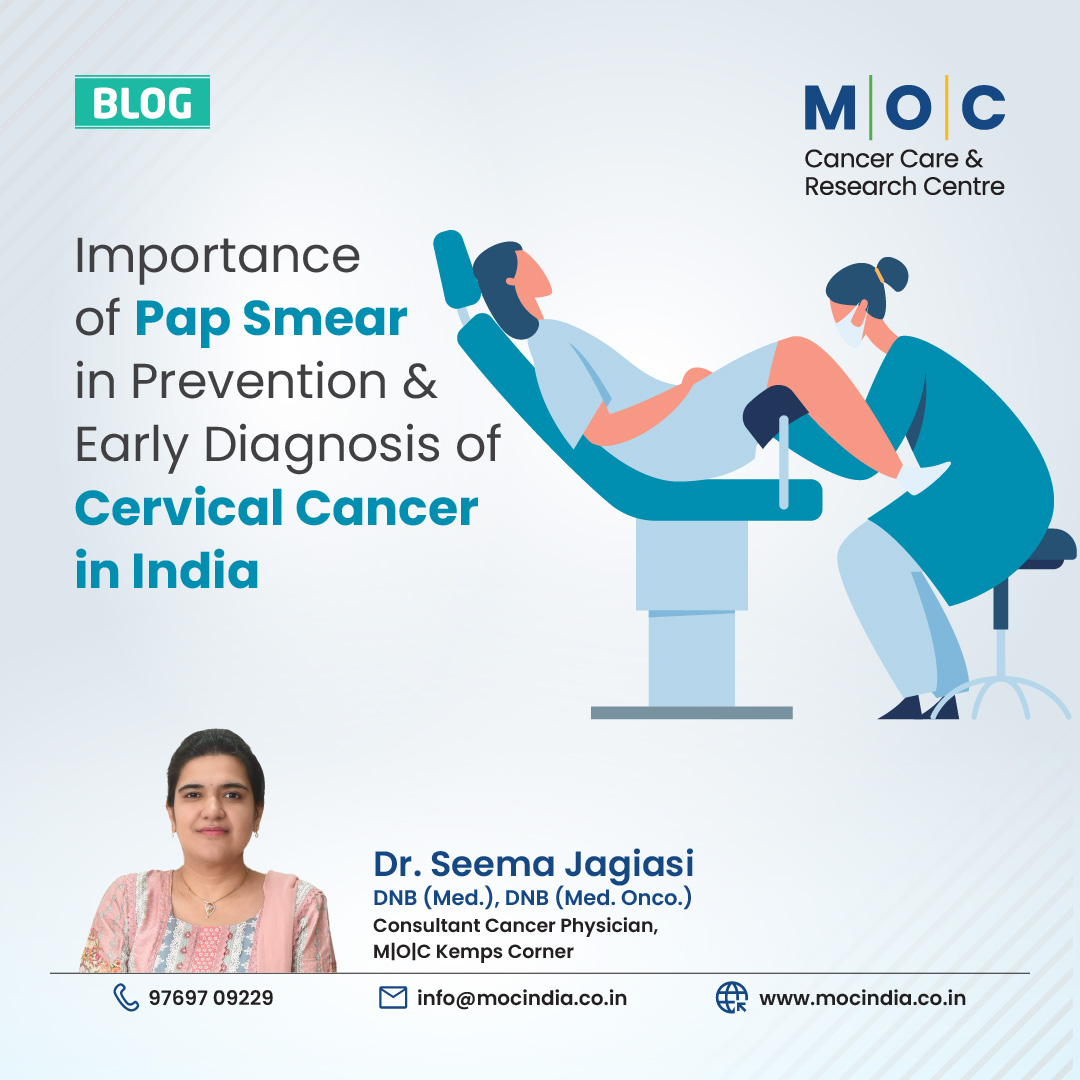
Cervical cancer remains one of the most common cancers affecting women in India, despite being largely preventable. According to estimates from the World Health Organization and the International Agency for Research on Cancer, India reported around 127,000 new cervical cancer cases and nearly 80,000 deaths in 2022, accounting for a significant share of the global burden. The disease develops slowly over several years, usually following persistent infection with high-risk Human papillomavirus (HPV). This long pre-cancerous phase provides a critical opportunity for detection and prevention through screening.
The Papanicolaou test, commonly known as the Pap smear, is a simple screening test that detects abnormal or precancerous cells in the cervix before they develop into invasive cancer. During the procedure, a small sample of cervical cells is collected and examined under a microscope. If abnormal cells are identified early, they can be treated effectively, preventing progression to cancer.
Countries that have implemented organized Pap smear screening programs have seen dramatic reductions in cervical cancer incidence and mortality. However, screening coverage in India remains extremely limited. Data from the National Family Health Survey indicate that only about 2% of eligible women in India have undergone cervical cancer screening. As a result, nearly 60–70% of cervical cancer cases in the country are diagnosed at advanced stages, when treatment becomes more complex and outcomes are poorer.
Several challenges limit the widespread use of Pap smear screening in India. One of the biggest barriers is lack of awareness and social stigma surrounding reproductive health. Many women hesitate to seek screening due to embarrassment, cultural taboos, or fear of a cancer diagnosis.
Another challenge is limited reach of screening services, particularly in rural and semi-urban areas. Pap smear testing requires trained healthcare workers, laboratory infrastructure, and cytology expertise for accurate interpretation. In many parts of the country, shortages of trained personnel and diagnostic facilities restrict access to reliable screening.
Affordability and health system limitations also play a role. Although the Pap smear itself is relatively inexpensive, follow-up procedures such as colposcopy and biopsy may be difficult for low-income patients to access. Additionally, many women who undergo screening are lost to follow-up due to logistical or financial barriers.
Improving cervical cancer outcomes in India requires strengthening screening programs at the primary healthcare level, increasing awareness, and integrating screening with HPV vaccination initiatives. When widely implemented, Pap smear screening has the potential to transform cervical cancer from a major public health burden into a largely preventable disease.
Dr. Seema Jagiasi
DNB (Internal Medicine) DNB (Medical Oncology)
Consultant Cancer Physician
MOC Cancer Care & Research Centre, Kemps Corner.
Latest Blogs
-
![Tumor vs Cancer: What Is the Difference? | MOC Cancer Care]()
- 31st Aug, 2026
- Tumor vs Cancer: What Is the Difference? | MOC Cancer Care
-
![Head and Neck Cancer in India: A Preventable Crisis We Can No Longer Ignore]()
- 4th Aug, 2026
- Head and Neck Cancer in India: A Preventable Crisis We Can No Longer Ignore
-
![Throat Cancer Symptoms: Early Warning Signs You Should Never Ignore]()
- 24th Jun, 2026
- Throat Cancer Symptoms: Early Warning Signs You Should Never Ignore
-
![Breast or Ovarian Cancer- A Familial Risk]()
- 12th May, 2026
- Breast or Ovarian Cancer- A Familial Risk
-
![Ovarian Cancer Is No Longer Just an Older Woman’s Disease]()
- 2nd May, 2026
- Ovarian Cancer Is No Longer Just an Older Woman’s Disease
-
![Why Pap Smear Matters for Cervical Cancer | Dr Seema Jagiasi]()
- 10th Mar, 2026
- Why Pap Smear Matters for Cervical Cancer | Dr Seema Jagiasi


.jpeg)


Book Your Appointment