


Leukemias in India- A Guide by Dr. Ashray Kole, Hemato-Oncologist & BMT Physician
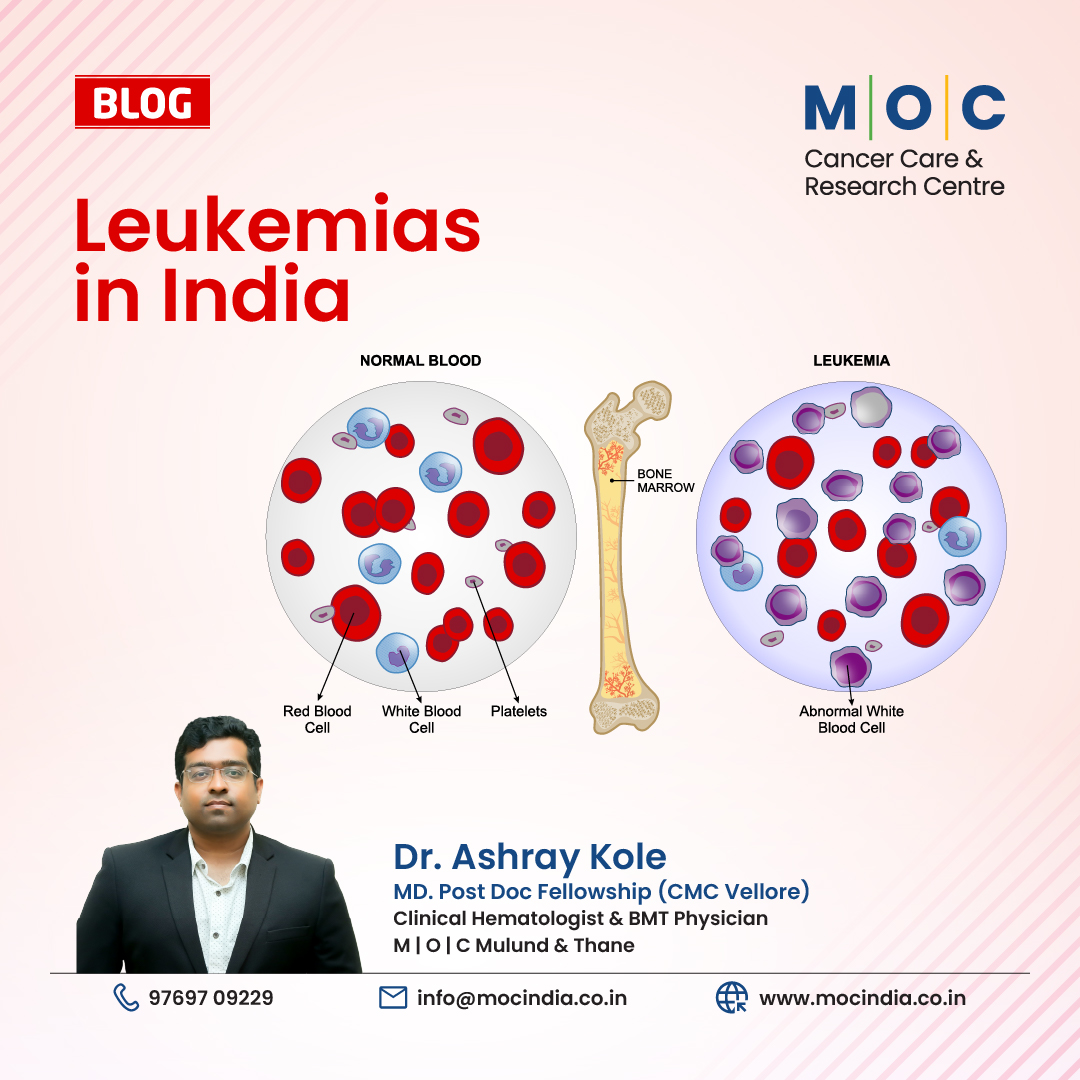
Leukaemia, commonly called blood cancer, is a group of diseases where the bone marrow makes abnormal white blood cells. In India, while exact national registries are still developing, blood cancers including leukaemia are recognised as among the more common childhood and adult cancers treated in oncology centres. India offers world-class care but faces unique challenges in awareness, diagnosis, and access to definitive treatment.
Who Gets Leukaemia in India?
Leukaemia affects both children and adults. Some types are fast-growing (acute), while others are slower (chronic). Chronic Myeloid Leukaemia (CML), for example, forms a significant proportion of adult cases in India and with modern therapies many patients now live long and productive lives. Compared to some Western nations, precise incidence rates are still under better documentation, but what matters most is early diagnosis and access to care.
Challenges in Diagnosis
One of the biggest hurdles we see in routine practice is delay in diagnosis. Symptoms of leukaemia- tiredness, frequent infections, easy bruising, unexplained fevers- are often initially mistaken for common illnesses. This leads to advanced disease by the time patients see a specialist. Simple tests like complete blood counts and peripheral blood smears are invaluable but under-utilised in primary care settings. Awareness among frontline doctors and communities is improving but still lags behind where it should be.
Types and Prognosis
There are several major types of leukaemia:- Acute Lymphoblastic Leukaemia (ALL): Common in children, curable in many with proper treatment.
- Acute Myeloid Leukaemia (AML): Seen more often in adults; requires intensive treatment.
- Chronic Myeloid Leukaemia (CML): Often controlled with daily oral medication.
- Chronic Lymphocytic Leukaemia (CLL): More indolent and needs personalised care. Prognosis depends on type, age, overall health, and how early treatment begins.
Misdiagnosis- A Real Concern
In my practice, I have seen many patients referred late, initially treated for anemia, infections, or vitamin deficiencies. Delayed bone marrow tests can postpone critical therapy. Early referral when a simple blood count looks abnormal makes a huge difference in outcomes.
Treatment Approaches in India
Treatment usually starts with chemotherapy, given in phases. Induction aims to bring the disease under control, followed by consolidation and sometimes maintenance phases. For many chronic forms like CML, targeted oral medicines allow patients to live near-normal lives.
For high-risk cases or relapsed disease, Bone Marrow Transplant (BMT)- also called stem cell transplant — is often the most effective curative option. India has excellent transplant programmes in both public and private centres.
Treatment Duration
Leukaemia treatment is not a short journey. Acute leukemias usually require intensive therapy over months, including hospital stays. Maintenance phases, especially in ALL, may continue for 1-2 years. BMT involves weeks in hospital and many months of recovery.
Role and Costs of Bone Marrow Transplant
BMT success rates in India are increasingly comparable to international standards. The cost of transplant varies widely- from around ?15–30 lakhs (autologous or allogeneic) in many centres and may be higher in premium private settings. Recent government and CSR-supported units are working to make these treatments more affordable.
Guidance on Financial Arrangements
Financial planning is as important as medical planning:
- Government Schemes: National programmes like Ayushman Bharat and state-level funds increasingly support cancer and transplant costs.
- Insurance: Cancer care coverage, including BMT, can be part of health plans if obtained early.
- Charities & NGOs: Many organisations in India assist families with funds or subsidised care.
Leukaemia can be daunting, but early diagnosis, evidence-based treatment, and well-informed support can change the narrative for most patients. My advice to families is simple: ask questions early, seek specialised care, and plan both medically and financially well ahead- because timely action saves lives.
Dr. Ashray Shrikant Kole
M.D (Medicine) PDF (Clinical Hematology - CMC Vellore)
Consultant Cancer Physician
MOC Cancer Care & Research Centre, Thane
& Mulund.
Latest Blogs
-
![Breast or Ovarian Cancer- A Familial Risk]()
- 12th May, 2026
- Breast or Ovarian Cancer- A Familial Risk
-
![Ovarian Cancer Is No Longer Just an Older Woman’s Disease]()
- 2nd May, 2026
- Ovarian Cancer Is No Longer Just an Older Woman’s Disease
-
![Why Pap Smear Matters for Cervical Cancer | Dr Seema Jagiasi]()
- 10th Mar, 2026
- Why Pap Smear Matters for Cervical Cancer | Dr Seema Jagiasi
-
![10 Facts about Human Papillomavirus Vaccine(HPV),You Should Know]()
- 9th Mar, 2026
- 10 Facts about Human Papillomavirus Vaccine(HPV),You Should Know
-
![Brain Cancers in India: Challenges & Progress- Dr. Ashwin Rajbhoj]()
- 5th Mar, 2026
- Brain Cancers in India: Challenges & Progress- Dr. Ashwin Rajbhoj
-
![Leukemias in India- A Guide by Dr. Ashray Kole, Hemato-Oncologist & BMT Physician]()
- 23rd Feb, 2026
- Leukemias in India- A Guide by Dr. Ashray Kole, Hemato-Oncologist & BMT Physician
Book Your Appointment