


Throat Cancer Symptoms: Early Signs & Warning Signs
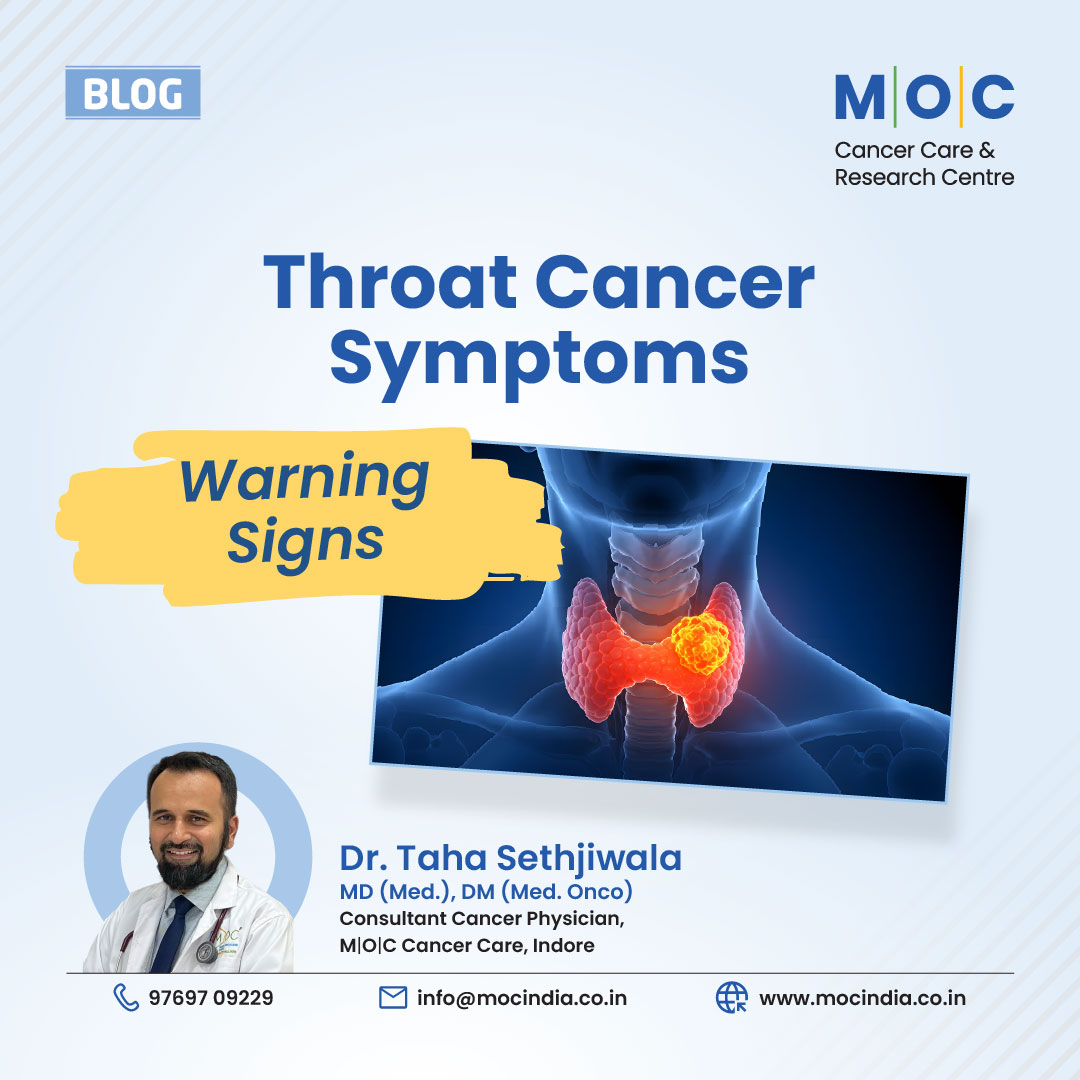
A persistent sore throat, unexplained change in voice, difficulty swallowing or a lump in the neck may seem like common problems. Often, they are caused by infections or other non-cancerous conditions. However, when such symptoms persist or keep returning, they should not be ignored. Knowing the throat cancer symptoms and understanding the early signs of throat cancer can help a person seek medical advice at the right time.
Throat cancer is a broad term commonly used for cancers developing in different parts of the throat, including the pharynx and larynx (voice box). The exact symptoms can vary depending on where the cancer begins.
For people in India, awareness is particularly important because tobacco use, including smoking and smokeless tobacco such as chewing tobacco and betel quid, is an important risk factor for several head and neck cancers. Alcohol use can further increase the risk, particularly when combined with tobacco.
What Is Throat Cancer?
The throat is not a single organ. It includes several connected areas involved in breathing, swallowing and speaking.Depending on where abnormal cells develop, doctors may refer to cancers as:
- Oropharyngeal cancer: Cancer affecting the back of the mouth and throat, including the tonsils and base of the tongue.
- Hypopharyngeal cancer: Cancer affecting the lower part of the throat.
- Laryngeal cancer: Cancer of the larynx, commonly called the voice box.
These cancers are part of the broader group known as head and neck cancers. Their symptoms can overlap, but some symptoms may be more noticeable depending on the location of the tumour.
India also carries a substantial burden of cancers affecting the head and neck region. According to IARC's GLOBOCAN 2022 estimates, lip and oral cavity cancer was the second most commonly diagnosed cancer overall in India, with more than 143,000 new cases estimated across both sexes.
This makes awareness of persistent mouth, throat, voice and neck changes especially important.
Throat Cancer Symptoms: What Should You Look Out For?
The following are some of the important throat cancer warning signs. Having one of these symptoms does not mean that you have cancer. Many of them can occur because of infections, acid reflux, allergies, voice strain or other common conditions. The concern arises when a symptom is persistent, unexplained, worsening or repeatedly returns.
- Persistent Sore Throat
- Persistent Hoarseness or Change in Voice A change in your voice may be one of the more noticeable early signs of throat cancer, particularly when the larynx or vocal cords are involved.
- Hoarse
- Rough or breathy
- Deeper or weaker than usual
- Different from your normal voice
- Difficulty or Pain While Swallowing
- A Lump or Swelling in the Neck
- Persistent Ear Pain
- A Feeling That Something Is Stuck in the Throat
- Unexplained Weight Loss
- Difficulty Breathing or Noisy Breathing
- Persistent Cough or Blood in Saliva/Phlegm
A sore throat is extremely common and is usually linked to an infection, allergy, irritation or another non-cancerous condition. However, a sore throat that does not improve, keeps coming back without an obvious reason or is accompanied by other symptoms should be evaluated by a doctor. Persistent throat pain is recognised as one of the possible symptoms of cancers affecting the throat and larynx.
Your voice may become:
If hoarseness persists without an obvious explanation, it should not simply be assumed to be a result of a cold or excessive talking. Laryngeal cancers affecting the vocal cords can sometimes produce voice changes relatively early.
Difficulty swallowing is medically known as dysphagia. Some people may describe it as feeling that food is getting stuck in the throat. Others may experience pain when swallowing, sometimes called odynophagia. These symptoms can have many causes, but persistent difficulty or pain while swallowing is one of the throat cancer symptoms that deserves medical evaluation.
A lump in the neck may sometimes be the first noticeable sign of a head and neck cancer. It may represent an enlarged lymph node or another abnormal growth. Importantly, not every neck lump is cancerous- neck lumps can occur because of infections and several other conditions. However, an unexplained lump that persists or increases in size should be examined rather than monitored indefinitely at home.
An unusual or persistent earache, particularly when there is no obvious ear infection, can sometimes be associated with cancers of the throat or oropharynx. This happens because nerves in the throat and ear can share pathways, so pain originating in the throat may sometimes be felt in the ear. Persistent ear pain therefore deserves attention, especially when it occurs along with a sore throat, difficulty swallowing or a neck lump.
Some people describe a persistent sensation of a lump, obstruction or something being "stuck" in the throat. This can have several non-cancerous causes, including reflux and other throat conditions. But if the sensation persists, particularly when accompanied by swallowing difficulty or unexplained throat pain, it should be checked by a doctor.
Losing weight without deliberately changing your diet or exercise routine can occur for many reasons. However, unexplained weight loss together with persistent swallowing difficulties, throat pain or other throat-related symptoms can be a warning sign that requires medical attention.
When a tumour affects the airway or voice box, a person may experience breathing difficulty or unusual/noisy breathing. Breathing difficulty is not something to ignore. If a person develops significant or sudden difficulty breathing, urgent medical attention is required.
A persistent cough can have many causes, including respiratory infections, smoking, asthma and acid reflux. However, a cough that does not settle, particularly when associated with other throat symptoms, should be assessed. Blood in saliva or phlegm without an obvious explanation also warrants medical evaluation.
What Are the Risk Factors for Throat Cancer?
Recognising symptoms is important, but understanding risk factors can also encourage people to pay attention to persistent changes.
- Tobacco- Smoking and smokeless tobacco are among the major risk factors for head and neck cancers. In India, smokeless tobacco products and preparations containing tobacco or betel quid are particularly relevant. Tobacco exposure is associated with cancers of several areas of the mouth, throat and voice box.
- Alcohol- Alcohol consumption is another recognised risk factor. Using tobacco and alcohol together can increase the risk more than either exposure alone.
- HPV- Certain types of human papillomavirus (HPV) can cause cancers of the oropharynx, particularly cancers involving the tonsils and base of the tongue. HPV-related oropharyngeal cancer can occur even in people who do not have the traditional tobacco and alcohol risk factors. It is important to remember that HPV infection is common and most infections clear naturally. Persistent infection with cancer-causing HPV types is the concern- not simply having had an HPV infection.
When Should You See a Doctor?
You do not need to panic every time you have a sore throat or hoarse voice. Most short-term throat symptoms are not caused by cancer.The more important question is: Is the symptom persistent, unexplained or getting worse?
Consider consulting a doctor if you experience:
- A sore throat that does not go away
- Persistent hoarseness or voice change
- Difficulty or pain while swallowing
- An unexplained neck lump
- Persistent ear pain without an obvious ear problem
- Repeated sensation of something stuck in the throat
- Unexplained weight loss
- Persistent cough or blood in saliva/phlegm
- Difficulty breathing or noisy breathing
Medical organisations emphasise that these symptoms can have causes other than cancer. A medical examination is therefore needed to determine what is actually causing them.
How Is Throat Cancer Diagnosed?
Symptoms alone cannot diagnose throat cancer. Depending on the symptoms and their location, a doctor may recommend an examination of the mouth and throat, an ENT evaluation or examination using specialised instruments. Further investigations may include imaging and, when appropriate, a biopsy. A biopsy is used to examine tissue under a microscope and establish whether cancer cells are present. The exact investigations depend on the person's symptoms, examination findings and suspected site of disease. This is why persistent symptoms should be evaluated rather than trying to diagnose the condition based on internet searches alone.
Why Recognising the Early Signs of Throat Cancer Matters
One of the biggest challenges with cancer awareness is that early symptoms can look like everyday problems. A sore throat may be dismissed as an infection. Hoarseness may be attributed to speaking for long hours. Difficulty swallowing may be ignored. A neck lump may be assumed to be a swollen gland. In many cases, these assumptions may be correct. But when symptoms persist or remain unexplained, getting them checked can help identify the underlying cause. For some laryngeal and hypopharyngeal cancers, symptoms such as voice changes can help bring the disease to medical attention earlier. This is why cancer awareness is not about creating fear. It is about helping people recognise when an ordinary symptom may need a closer look.
MOC Cancer Care: Creating Awareness Around Cancer Symptoms
At M|O|C Cancer Care, cancer awareness and patient education are an important part of encouraging people to understand changes in their health and seek appropriate medical advice. Through awareness-led communication, the aim is to help people recognise potential warning signs, understand when symptoms should be evaluated and avoid unnecessary delays in seeking professional medical advice.
When it comes to throat and other head and neck cancers, awareness can begin with something as simple as paying attention to a persistent change in the throat, voice, swallowing pattern or neck. The purpose is not to encourage people to self-diagnose. It is to encourage them to recognise, ask questions and get the right medical evaluation when something does not seem normal.
Frequently Asked Questions About Throat Cancer Symptoms
- What is the most common symptom of throat cancer?- There is no single symptom that occurs in every person. Depending on the location of the cancer, symptoms may include persistent sore throat, hoarseness or voice change, difficulty swallowing, pain while swallowing, a neck lump or persistent ear pain.
- How long can a sore throat last before I should see a doctor?- Most sore throats caused by common infections improve with time. A sore throat that persists, keeps returning without an obvious reason or is accompanied by symptoms such as difficulty swallowing, ear pain, a neck lump or unexplained weight loss should be medically evaluated.
- Is hoarseness always a sign of throat cancer?- No. Hoarseness can occur because of infections, voice strain, reflux and several other conditions. However, persistent or unexplained hoarseness should be evaluated, particularly when it does not return to your normal voice.
- Can throat cancer occur without pain?- Yes. Not every throat cancer causes pain in the early stages. Some cancers may first present with a voice change, swallowing difficulty or a lump in the neck. Some oropharyngeal cancers can also have few or no obvious symptoms initially.
- Does tobacco increase the risk of throat cancer?- Yes. Tobacco- including smoking and smokeless tobacco is a major risk factor for several cancers of the head and neck. Alcohol can further increase the risk, particularly when used together with tobacco.
- Can HPV cause throat cancer?- Certain high-risk HPV infections can cause oropharyngeal cancers, particularly cancers involving the tonsils and base of the tongue. HPV-related oropharyngeal cancer is distinct from cancers of other parts of the throat and head and neck.
- Can throat cancer be treated?- Treatment depends on the exact type, location and stage of cancer, as well as the person's overall medical situation. Depending on these factors, treatment may involve surgery, radiation therapy, chemotherapy, targeted therapy, immunotherapy or combinations of these approaches.
Conclusion
Knowing the throat cancer symptoms does not mean assuming the worst when you have a sore throat or voice change. It means knowing which changes deserve attention. A persistent sore throat, unexplained hoarseness, difficulty swallowing, a neck lump, persistent ear pain or unexplained weight loss should not be ignored, especially when symptoms continue or worsen. Early recognition cannot diagnose cancer on its own, but it can encourage timely medical evaluation. If you or someone you know has persistent or unexplained throat, voice, swallowing or neck symptoms, speak with a qualified doctor or cancer specialist for appropriate evaluation.
M|O|C Cancer Care is committed to spreading cancer awareness and helping people recognise potential warning signs so that concerns can be evaluated without unnecessary delay.
Don’t Ignore Persistent Throat Symptoms- A persistent sore throat, voice change, difficulty swallowing or unexplained neck lump deserves medical attention.
Talk to a Cancer Specialist at M|O|C Cancer Care
Dr. Taha Sethjiwala
M.D D.M
Consultant Cancer Physician
MOC Cancer Care & Research Centre, Indore.
Latest Blogs
-
![Throat Cancer Symptoms: Early Signs & Warning Signs]()
- 24th Sep, 2026
- Throat Cancer Symptoms: Early Signs & Warning Signs
-
![Endometrial Cancer Staging: Stages 1 to 4 Explained]()
- 22nd Sep, 2026
- Endometrial Cancer Staging: Stages 1 to 4 Explained
-
![Colon Cancer vs Piles: How to Tell the Difference]()
- 21st Sep, 2026
- Colon Cancer vs Piles: How to Tell the Difference
-
![Tumor vs Cancer: What Is the Difference? | MOC Cancer Care]()
- 31st Aug, 2026
- Tumor vs Cancer: What Is the Difference? | MOC Cancer Care
-
![Head and Neck Cancer in India: A Preventable Crisis We Can No Longer Ignore]()
- 4th Aug, 2026
- Head and Neck Cancer in India: A Preventable Crisis We Can No Longer Ignore
-
![Throat Cancer Symptoms: Early Warning Signs You Should Never Ignore]()
- 24th Jun, 2026
- Throat Cancer Symptoms: Early Warning Signs You Should Never Ignore

.jpeg)


.jpeg)
Book Your Appointment