

Lymphoma: Types, Symptoms & Treatment in India
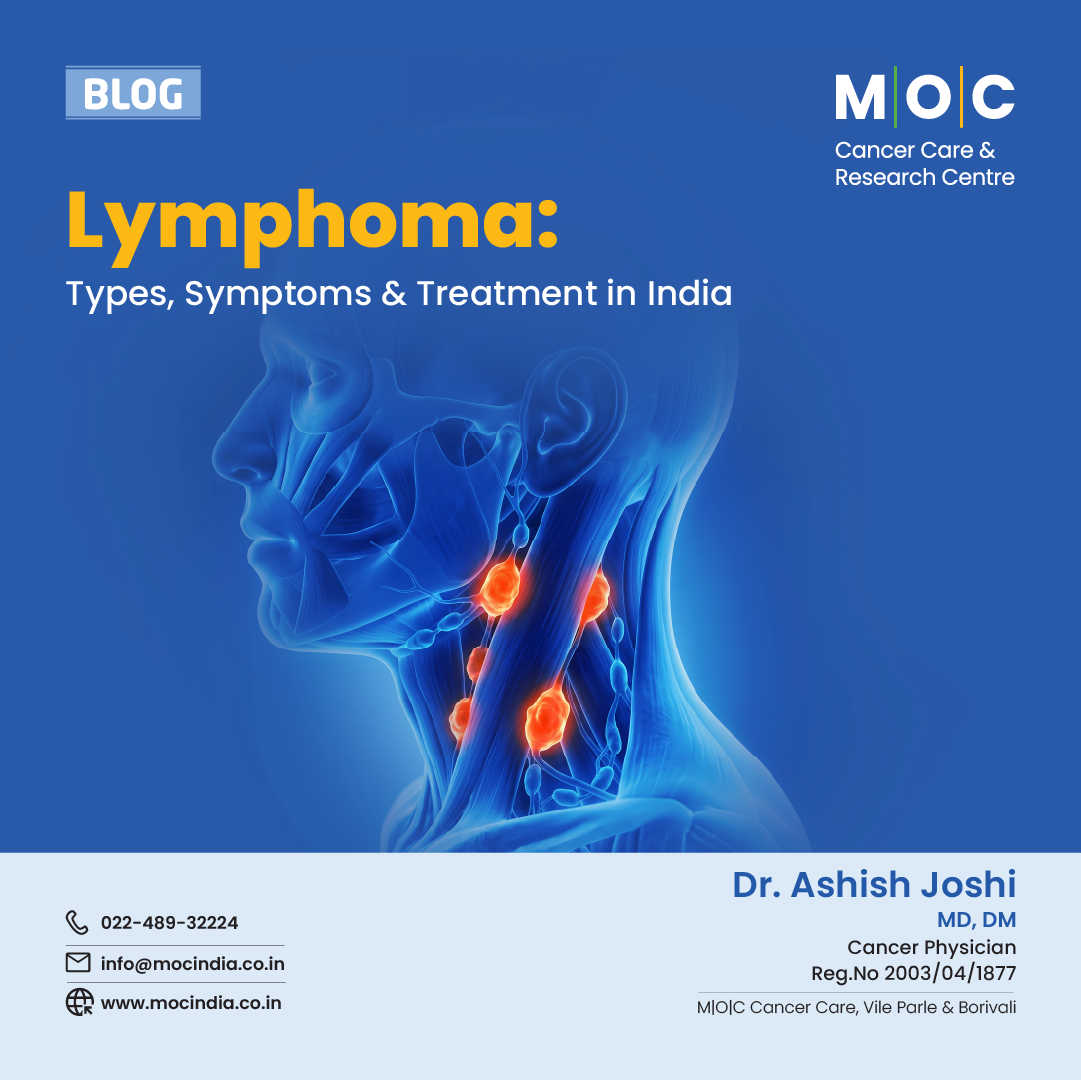
Swollen Lymph Glands: When Could It Be Lymphoma?
A swollen lymph gland is not always a cause for concern. But when should you pay attention?
Have you ever noticed a small swelling on your neck during a fever or sore throat? It may be an enlarged lymph gland. These glands often swell when the body fights an infection and return to normal as the infection improves. However, persistent or unexplained swelling can sometimes be a sign of lymphoma, a cancer of the lymphatic system.
Understanding the signs of lymphoma can help people seek medical advice at the right time.
What are lymph glands?
Lymph glands, medically known as lymph nodes, are small, bean-shaped structures found in areas such as the neck, underarms and groin, as well as deeper inside the chest and abdomen.
They are part of the lymphatic system and help the immune system fight infections. When the body encounters an infection, lymph nodes may enlarge temporarily.
Not every swollen lymph gland indicates cancer. Infections are a common cause of swelling. However, a persistent, unexplained or growing lump deserves medical evaluation.
What is lymphoma?
Lymphoma develops when certain white blood cells, called lymphocytes, begin growing abnormally. Although it commonly affects lymph nodes, it can also involve the spleen, bone marrow and other organs.
Lymphoma is broadly classified into two main types:
- Hodgkin lymphoma: This can affect both young adults and older people. It often presents as a painless swelling of lymph nodes. Many patients can be cured with appropriate treatment, including those with advanced disease.
- Non-Hodgkin lymphoma (NHL):This includes many different diseases, ranging from slow-growing to aggressive forms. Examples include diffuse large B-cell lymphoma (DLBCL), follicular lymphoma, mantle cell lymphoma and marginal zone lymphoma. Treatment depends on the specific subtype and how the disease behaves.
- 43,567 new cases of non-Hodgkin lymphoma in 2022
- 11,674 new cases of Hodgkin lymphoma in 2022
- Persistent, painless swelling: A lump in the neck, underarm or groin that does not settle or continues to grow.
- Unexplained fever: Repeated or persistent fever without an obvious cause.
- Heavy night sweats: Episodes of drenching sweats during sleep.
- Unexplained weight loss: Losing weight without changes in diet or physical activity.
- Persistent fatigue: Unusual tiredness, especially when accompanied by other symptoms.
- Other symptoms: Cough, breathlessness, abdominal discomfort or a feeling of fullness, depending on where lymphoma develops
- Blood tests assess blood cell counts and general health, although normal results do not rule out lymphoma.
- Lymph node biopsy examines affected tissue and is generally essential to confirm the diagnosis and identify the subtype.
- CT or PET-CT scans help assess the extent of disease.
- Additional tests, such as bone marrow examination or specialised laboratory studies, may be recommended depending on the case.
- Chemotherapy: Medicines that destroy cancer cells or stop them from multiplying.
- Immunotherapy: Treatments that help the immune system attack cancer cells.
- Targeted therapy: Medicines that act on specific proteins or pathways involved in cancer growth.
- Radiation therapy: Used in selected situations to treat affected areas.
- Stem cell transplantation: Considered for certain patients, particularly in specific relapsed or high-risk settings.
The key point is that lymphoma is not one single disease. Accurate diagnosis is essential because different types require different treatment approaches.
Lymphoma in India: The numbers
According to estimates published by India's National Cancer Registry Programme in the Indian Journal of Medical Research, India recorded an estimated:
Together, this represents approximately 55,000 estimated new cases in that year.
Lymphoma affects people across age groups. Some types are more common in younger people, while others occur more frequently in older adults. Raising awareness and improving access to timely diagnosis remain important aspects of cancer care in India.
Symptoms of lymphoma: What should you look for?
Symptoms vary depending on the type of lymphoma and the areas affected. Warning signs may include:
Fever, drenching night sweats and significant unexplained weight loss are known as B symptoms in lymphoma care.
These symptoms can occur in many other conditions and do not necessarily indicate cancer. However, persistent or unexplained symptoms should not be ignored.
How is lymphoma diagnosed?
Diagnosis begins with a medical assessment and appropriate investigations.
The results help doctors determine the stage of lymphoma and plan appropriate treatment.
How is lymphoma treated?
Treatment depends on the subtype, stage, symptoms and the patient's overall health. Options include:
Some slow-growing lymphomas may initially be managed through active surveillance, with regular monitoring and treatment when necessary.
Advances in lymphoma treatment
Treatment options have expanded considerably in recent years, particularly for some lymphomas that return after treatment or do not respond adequately.
Antibody-based treatments help the immune system recognise lymphoma cells, while certain targeted medicines act on specific cancer-related pathways.
CAR T-cell therapy involves modifying a patient's immune cells to recognise and attack cancer cells. It can be an option for selected patients with certain lymphomas that have returned or resisted earlier treatment.
Bispecific antibodies help bring immune cells into contact with lymphoma cells, enabling the immune system to attack them. Checkpoint inhibitors, another form of immunotherapy, have an important role in selected lymphoma subtypes.
These treatments are not suitable for every patient, and their availability varies across India. A medical oncologist or haematologist can help determine the most appropriate approach for an individual diagnosis.
The takeaway: Know the signs, not the fear
Lymph glands are an essential part of the body's immune defence, and swelling often occurs due to infections. But a persistent, unexplained or growing lump deserves attention, particularly when accompanied by fever, drenching night sweats or unexplained weight loss.
Lymphoma is a group of diseases, and many types respond well to treatment. Several can be cured, while others can be controlled with appropriate care.
Awareness is not about fearing every lump. It is about knowing when not to ignore one.
Dr. Ashish Joshi
M.D D.M
Consultant Cancer Physician
MOC Cancer Care & Research Centre, Borivali & Vile parle.
Latest Blogs
-
- 27th Oct, 2026
- Lymphoma: Types, Symptoms & Treatment in India
-
![Multiple Myeloma: When Routine Clinical Findings Point to a Plasma Cell Disorder]()
- 14th Oct, 2026
- Multiple Myeloma: When Routine Clinical Findings Point to a Plasma Cell Disorder
-
![5 Healthy Habits That Don't Prevent Liver Cancer]()
- 12th Oct, 2026
- 5 Healthy Habits That Don't Prevent Liver Cancer
-
![One Breast Bigger Than the Other: Normal or a Warning Sign?]()
- 8th Oct, 2026
- One Breast Bigger Than the Other: Normal or a Warning Sign?
-
![Peau d’Orange: Orange-Peel Skin and Breast Cancer Signs]()
- 7th Oct, 2026
- Peau d’Orange: Orange-Peel Skin and Breast Cancer Signs
-
![Second-Hand Smoke: Can Your Neighbour’s Cigarette Harm You?]()
- 7th Oct, 2026
- Second-Hand Smoke: Can Your Neighbour’s Cigarette Harm You?


.jpeg)

.jpeg)
Book Your Appointment