

CAR T-Cell Therapy for Blood Cancer | Dr Sanket Shah
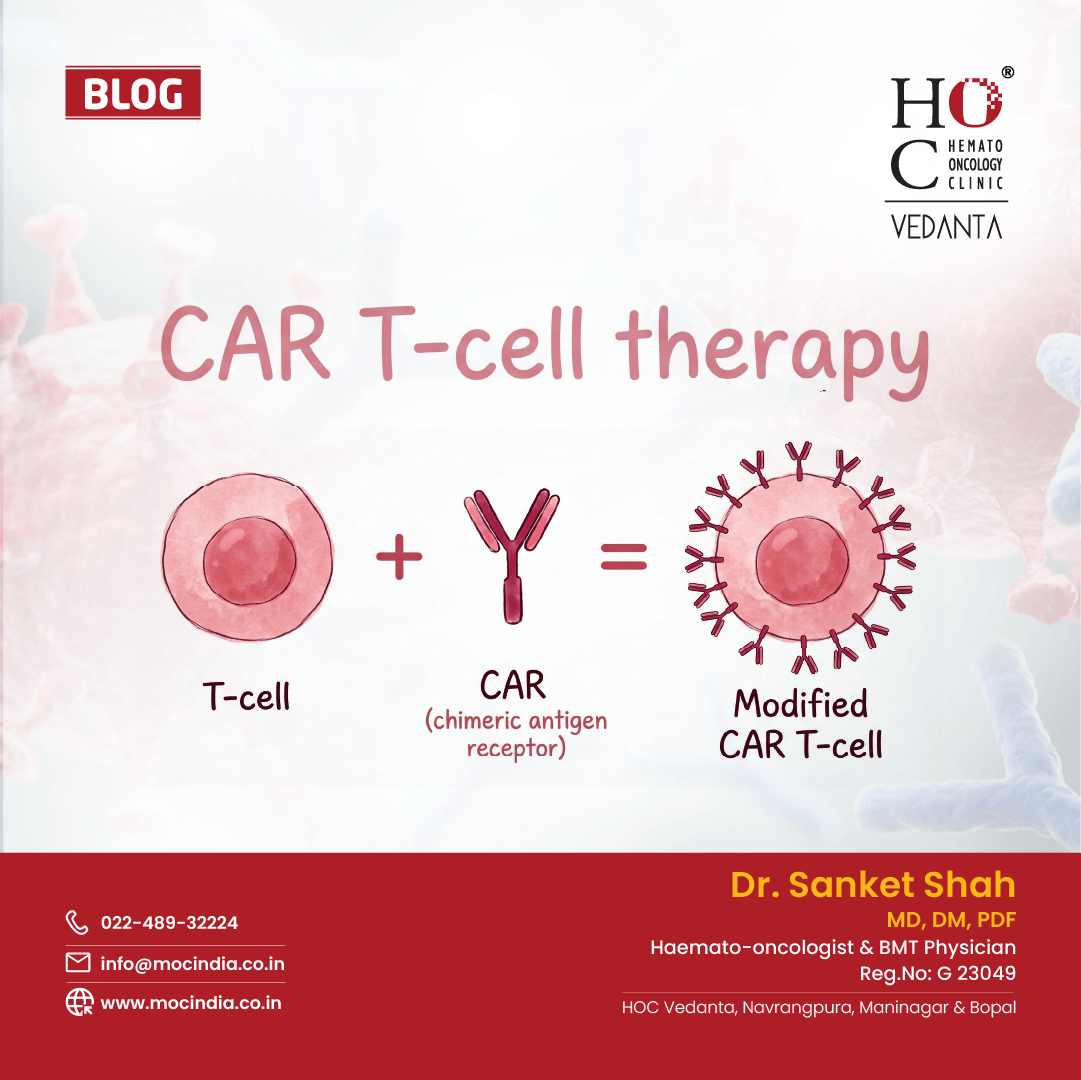
CAR T-Cell Therapy for Blood Cancer: How This Breakthrough Treatment Works
What if we could train the body's own immune cells to recognise and destroy cancer cells? This is no longer science fiction. CAR T-cell therapy, a breakthrough in cancer treatment, is offering new hope to patients battling certain difficult-to-treat blood cancers.
How does CAR T-cell therapy work?
Our immune system contains T-cells that help fight infections and other threats. Cancer cells, however, can evade these defences. CAR T-cell therapy aims to overcome this challenge by re-engineering a patient's own T-cells to recognise specific markers on cancer cells.
These cells are collected from the patient's blood, genetically modified in a specialised laboratory, multiplied and infused back into the patient. Once inside the body, they identify and attack targeted cancer cells. In essence, the patient's immune system is equipped with new instructions to fight cancer.
A global breakthrough, an Indian innovation
Globally, CAR T-cell therapy has transformed treatment for selected patients with blood cancers, including certain leukaemias, lymphomas and multiple myeloma. Clinical trials have demonstrated that some patients whose cancers have returned or resisted multiple treatments can achieve complete remission, with some maintaining responses for years. However, outcomes vary, and the therapy is not suitable for every cancer patient.
India has made a significant contribution to this evolving field with NexCAR19, its first indigenously developed CAR T-cell therapy. Developed through collaboration involving IIT Bombay, Tata Memorial Centre and ImmunoACT, it received regulatory approval in October 2023 and was launched in April 2024.
In early clinical studies, 36 of 53 evaluable patients with advanced B-cell leukaemia or lymphoma responded to treatment. These findings highlighted the potential of Indian scientific innovation to bring advanced cellular therapies to patients who need new treatment options.
Hope, with the right expertise
CAR T-cell therapy can cause serious complications, including cytokine release syndrome and neurological side effects. Therefore, careful patient selection, specialised medical teams and close monitoring are essential.
For India, the next step is to strengthen research, expand clinical experience and generate long-term evidence on treatment outcomes. Continued collaboration between clinicians, researchers and biotechnology innovators will be central to this progress.
CAR T-cell therapy represents more than a technological milestone. For patients facing challenging blood cancers, it opens another avenue when conventional treatments may no longer work. By advancing homegrown innovation and evidence-based care, India is helping shape a future in which scientific progress translates into meaningful new possibilities for people living with cancer.
Learn more about advanced blood cancer treatments with Dr Sanket Shah, Hemato-Oncologist and Bone Marrow Transplant Physician at HOC Vedanta, Ahmedabad.
Dr. Sanket Shah
M.D D.M
Consultant Cancer Physician
HOC Vedanta, Navrangpura , Maninagar, Bopal .
Latest Blogs
-
![CAR T-Cell Therapy for Blood Cancer | Dr Sanket Shah]()
- 30th Oct, 2026
- CAR T-Cell Therapy for Blood Cancer | Dr Sanket Shah
-
- 27th Oct, 2026
- Lymphoma: Types, Symptoms & Treatment in India
-
![Multiple Myeloma: When Routine Clinical Findings Point to a Plasma Cell Disorder]()
- 14th Oct, 2026
- Multiple Myeloma: When Routine Clinical Findings Point to a Plasma Cell Disorder
-
![5 Healthy Habits That Don't Prevent Liver Cancer]()
- 12th Oct, 2026
- 5 Healthy Habits That Don't Prevent Liver Cancer
-
![One Breast Bigger Than the Other: Normal or a Warning Sign?]()
- 8th Oct, 2026
- One Breast Bigger Than the Other: Normal or a Warning Sign?
-
![Peau d’Orange: Orange-Peel Skin and Breast Cancer Signs]()
- 7th Oct, 2026
- Peau d’Orange: Orange-Peel Skin and Breast Cancer Signs
.jpeg)

Book Your Appointment