

Lung Cancer in India: Risks, Symptoms & Treatment | MOC Cancer Care
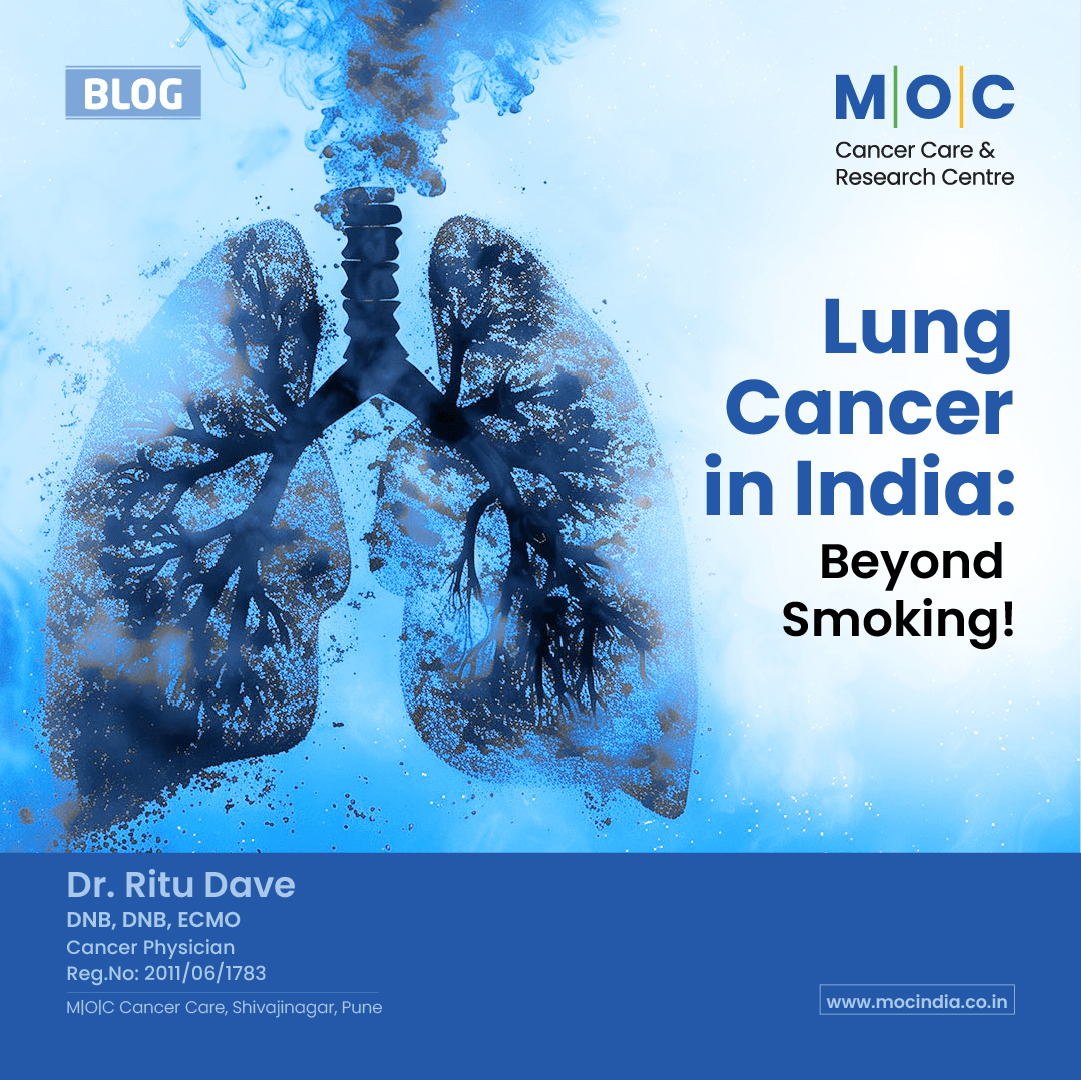
Lung Cancer in India: Beyond Smoking, Understanding the Risks, Treatment and Hope
A persistent cough is easy to dismiss in India. It may be blamed on pollution, changing weather, smoking or a seasonal infection. But when symptoms persist, ignoring them can have serious consequences. Lung cancer is no longer just a smoker's disease; it is a growing public health concern shaped by India's environment, occupations, lifestyles and socioeconomic realities.
According to the Indian Council of Medical Research (ICMR), India recorded an estimated 1,03,371 lung cancer cases in 2022. Tobacco consumption, including cigarettes and bidis, remains a major risk factor. However, outdoor air pollution, household smoke from traditional cooking fuels, second-hand smoke and occupational exposure to substances such as silica and asbestos also contribute to risk.
The social dimension is particularly important. Construction workers, traffic personnel and industrial labourers may face prolonged exposure to pollutants. Women who have spent years cooking with biomass fuels may also face risks despite never having smoked. Meanwhile, the tendency to normalise persistent coughing or self-medicate can delay diagnosis.
The economic consequences extend beyond medical expenses. Investigations, hospital visits, treatment and travel can drain family savings, particularly when patients must travel from smaller towns to specialised centres. When the primary earning member falls ill, families may face lost income, borrowing and disruption to children's education. The government and public healthcare system also bear the burden of increased treatment costs and productivity losses. Prevention and timely diagnosis are therefore economic necessities as much as healthcare priorities.
Treatment advances, particularly immunotherapy, offer renewed hope. Unlike chemotherapy, which directly attacks rapidly dividing cells, immunotherapy helps the body's immune system recognise and fight cancer. Depending on tumour characteristics and patient eligibility, it may be used alone or alongside chemotherapy. It is not suitable for everyone, making specialist evaluation and tumour testing essential.
A retrospective M|O|C Cancer Care study covering Western India (2018–2025) included 3,080 lung cancer patients. Among 319 patients who received immunotherapy, 85.3% had stage IV disease. The observed tumour response rate among those receiving first-line immunotherapy was 53.8%, highlighting the potential of newer treatments in appropriate patients.
However, access to treatment must go hand in hand with adherence. Patients should not discontinue medicines, miss appointments or ignore side effects without consulting their oncologist.
Through clinical care, research and awareness initiatives, M|O|C Cancer Care aims to encourage tobacco avoidance, healthier environments, recognition of warning signs, timely medical consultation and completion of recommended treatment.
Lung cancer awareness must go beyond fear: it must empower people to prevent avoidable risks, seek help early and recognise that a cancer diagnosis does not mean hope is lost.
Don't Ignore the Warning Signs. Take the First Step Towards Better Lung Health. If you have a persistent cough, unexplained breathlessness, chest pain or other concerning symptoms, consult a cancer specialist for timely evaluation. Early medical attention can make a difference.
Dr. Ritu Dave
DNB DNB ECMO
Consultant Cancer Physician
MOC Cancer Care & Research Centre, Shivaji Nagar.
Latest Blogs
-
- 17th Nov, 2026
- Chronic Myeloid Leukaemia: A New Treatment Era
-
![Lung Cancer in India: Risks, Symptoms & Treatment | MOC Cancer Care]()
- 17th Nov, 2026
- Lung Cancer in India: Risks, Symptoms & Treatment | MOC Cancer Care
-
![AQI and Lung Cancer Risk in India: The Hidden Health Cost]()
- 16th Nov, 2026
- AQI and Lung Cancer Risk in India: The Hidden Health Cost
-
![What Is Chemotherapy? How It Works, Side Effects & Care]()
- 5th Nov, 2026
- What Is Chemotherapy? How It Works, Side Effects & Care
-
- 4th Nov, 2026
- Blood Cancer Symptoms: 10 Warning Signs You Should Never Ignore
-
![CAR T-Cell Therapy for Blood Cancer | Dr Sanket Shah]()
- 30th Oct, 2026
- CAR T-Cell Therapy for Blood Cancer | Dr Sanket Shah
Book Your Appointment