

Chronic Myeloid Leukaemia: A New Treatment Era
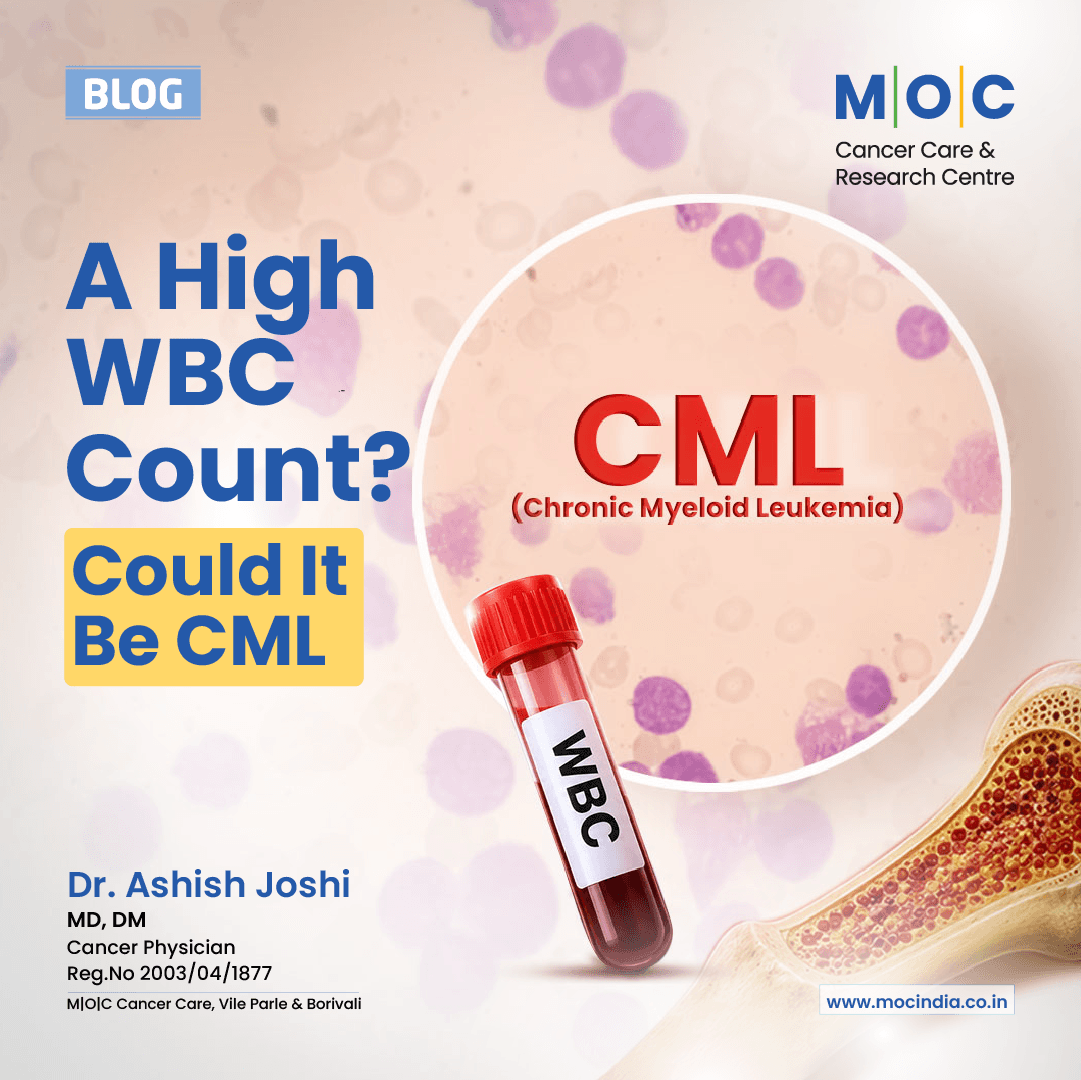
Chronic Myeloid Leukaemia (CML): From a High White Blood Cell Count to a New Era of Targeted Treatment
A diagnosis of blood cancer can be frightening, particularly when a blood report shows an extremely high white blood cell count. However, Chronic Myeloid Leukaemia (CML) is one of the greatest success stories in modern cancer treatment. Advances in molecular diagnosis and targeted medicines have transformed it from a potentially life-threatening disease into a condition that can often be controlled for decades.
Understanding CML and High White Blood Cell Counts
It is characterised by the excessive production of abnormal white blood cells, particularly cells of the myeloid lineage.
One of the common findings at diagnosis is leukocytosis, or an abnormally high white blood cell (WBC) count. While a normal WBC count is generally around 4,000–11,000 cells per microlitre of blood, patients with CML may have counts running into tens or even hundreds of thousands.
Some patients have no symptoms and are diagnosed incidentally during routine blood investigations. Others may experience fatigue, weakness, unexplained weight loss, night sweats or abdominal fullness due to an enlarged spleen. A high WBC count alone does not confirm CML; a peripheral blood smear and specialised molecular tests are required.
The Philadelphia Chromosome: Understanding the Disease Mechanism
In most patients, CML is associated with a genetic abnormality called the Philadelphia chromosome, formed by an exchange of genetic material between chromosomes 9 and 22. This creates the BCR::ABL1 fusion gene, which produces an abnormal protein with continuously active tyrosine kinase activity.
This protein sends uncontrolled signals that cause blood cells to multiply. Identifying this abnormality was a major breakthrough because it provided a specific target for treatment.
Imatinib: A Landmark in Cancer Treatment
The introduction of Imatinib, the first widely used targeted tyrosine kinase inhibitor (TKI) for CML, revolutionised its management. Instead of relying primarily on conventional chemotherapy, doctors could now target the abnormal BCR::ABL1 protein responsible for the disease.
Imatinib blocks this protein's activity, helping restore more normal blood cell production and achieve sustained disease control. It is generally taken orally and remains an important first-line treatment for many patients with newly diagnosed chronic-phase CML.
Other treatment options include second-generation TKIs such as Dasatinib, Nilotinib and Bosutinib. Asciminib, which acts through a different mechanism, is another important option for selected patients, particularly in certain previously treated settings. The choice depends on the disease phase, molecular response, associated health conditions, side-effect profile and treatment history.
Monitoring Treatment: More Than Just a Normal Blood Count
A reduction in the WBC count is an important early sign of response, but it does not necessarily mean that the disease has been completely controlled.
Doctors assess treatment response through quantitative BCR::ABL1 PCR testing, which measures the amount of the abnormal genetic marker in the blood.
Important molecular milestones include:
- 3 months: BCR::ABL1 level of 10% or lower.
- 6 months: BCR::ABL1 level of 1% or lower.
- 12 months: BCR::ABL1 level of 0.1% or lower, indicating a major molecular response.
Regular monitoring helps identify patients responding well to treatment and those who may need a change in their treatment strategy.
Operational Cure: Can Treatment Eventually Be Stopped?
One of the most exciting developments in CML management is the possibility of treatment-free remission (TFR), sometimes described as an operational or functional cure.
Some patients who have received targeted treatment for several years and achieved a sustained deep molecular response may be eligible to discontinue medication under strict specialist supervision.
CML: A Success Story of Modern Medical Oncology
The transformation in CML treatment demonstrates the power of precision medicine. A disease that once had limited treatment options can now be managed effectively in many patients through oral targeted medicines.
In India, generic drug availability, improved access to molecular testing and patient-assistance initiatives have further strengthened the treatment landscape. Nevertheless, consistent medication use, affordability and regular follow-up remain essential.
CML is no longer viewed only through the lens of a cancer diagnosis. For many patients, it is a manageable long-term condition. With timely diagnosis, appropriate targeted treatment and sustained molecular monitoring, the possibility of living a long and fulfilling life is now a realistic goal.
Dr. Ashish Joshi
M.D D.M
Consultant Cancer Physician
MOC Cancer Care & Research Centre, Borivali & Vile parle.
Latest Blogs
-
- 17th Nov, 2026
- Chronic Myeloid Leukaemia: A New Treatment Era
-
![Lung Cancer in India: Risks, Symptoms & Treatment | MOC Cancer Care]()
- 17th Nov, 2026
- Lung Cancer in India: Risks, Symptoms & Treatment | MOC Cancer Care
-
![AQI and Lung Cancer Risk in India: The Hidden Health Cost]()
- 16th Nov, 2026
- AQI and Lung Cancer Risk in India: The Hidden Health Cost
-
![What Is Chemotherapy? How It Works, Side Effects & Care]()
- 5th Nov, 2026
- What Is Chemotherapy? How It Works, Side Effects & Care
-
- 4th Nov, 2026
- Blood Cancer Symptoms: 10 Warning Signs You Should Never Ignore
-
![CAR T-Cell Therapy for Blood Cancer | Dr Sanket Shah]()
- 30th Oct, 2026
- CAR T-Cell Therapy for Blood Cancer | Dr Sanket Shah



Book Your Appointment