


Endometrial Cancer Staging: Stages 1 to 4 Explained
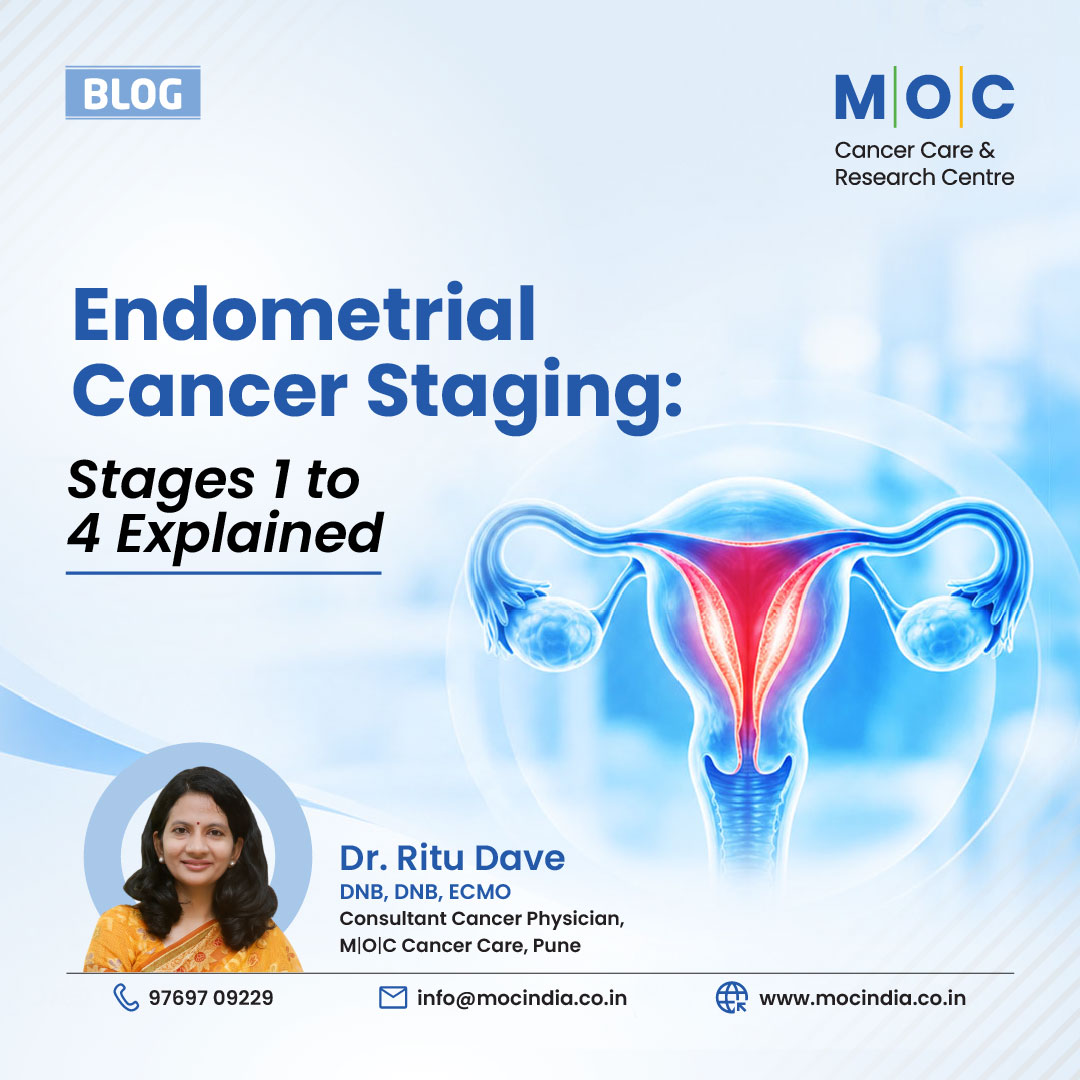
Being diagnosed with endometrial cancer can bring many questions, and one of the first is often: “What stage is the cancer?” Understanding endometrial cancer staging can help patients and families understand how far the cancer has spread and why doctors may recommend particular tests and treatments.
Endometrial cancer begins in the endometrium, the inner lining of the uterus. The stage describes how far the cancer has spread from where it started. Doctors consider factors such as the tumour's location, how deeply it has grown into the uterus, whether nearby tissues or lymph nodes are involved, and whether it has spread to distant organs.
It is important to know that staging is not based on one scan or one test alone. Endometrial cancer is generally surgically and pathologically staged, meaning that information from surgery and examination of the removed tissue can be important in determining the final stage.
What Is Endometrial Cancer Staging?
Cancer staging is a way of describing the extent of cancer in the body. For endometrial cancer, doctors broadly classify the disease from Stage 1 to Stage 4:
Stage 1: Cancer is largely confined to the uterus, with specific features determining the exact subgroup.
Stage 2: The cancer has involved the cervix or has certain other high-risk features but has not spread outside the uterus in the ways defined by this stage.
Stage 3: The cancer has spread locally or regionally beyond the uterus.
Stage 4: The cancer has reached the bladder or bowel mucosa or has spread to distant sites.
The higher stage generally indicates more extensive spread, but stage alone does not tell the complete story. The type and grade of cancer and, increasingly, its molecular characteristics also help doctors understand the disease and plan treatment.
Why Is Endometrial Cancer Staging Important?
Knowing the stage helps the cancer care team understand the extent of disease and plan treatment. For example, doctors may need to determine:
- How deeply the tumour has grown into the uterine muscle
- Whether the cervix is involved
- Whether lymph nodes contain cancer cells
- Whether the ovaries, fallopian tubes or other nearby structures are involved
- Whether there is spread within the abdomen or pelvis
- Whether cancer has reached distant organs
- What type and grade of endometrial cancer is present
- Whether molecular testing provides additional information about the tumour
This information is considered together rather than relying on stage alone. The 2023 FIGO system incorporates histological characteristics and, when available, molecular classification into the overall assessment of endometrial cancer.
Stages of Endometrial Cancer
The current 2023 FIGO staging system has refined some of the older stage definitions. Therefore, patients may find different descriptions of Stage 1 or Stage 2 when searching online. Here is a simplified explanation.
Endometrial Cancer Stage 1- In broad terms, endometrial cancer stage 1 refers to cancer that is confined to the uterine corpus, although the newer FIGO system has several important subcategories. Stage IA
Stage IA includes certain cancers that are limited to the endometrium or have limited invasion into the uterine muscle, depending on the tumour's histological type and lymphovascular space invasion (LVSI).
The 2023 FIGO system further divides Stage IA into:
- IA1: Certain non-aggressive tumour types limited to an endometrial polyp or the endometrium.
- IA2: Certain non-aggressive tumours involving less than half of the myometrium, with no or only focal LVSI.
- IA3: Selected low-grade endometrioid cancers involving the uterus and a specific pattern of ovarian involvement.
The myometrium is the muscular layer of the uterus. How deeply cancer has invaded this layer is an important part of staging.
Stage IB
Stage IB generally refers to certain non-aggressive histological types that have invaded half or more of the myometrium, without substantial/extensive LVSI.
This is one reason why simply saying “Stage 1” does not provide the entire picture. The pathology report may contain additional information that helps the doctor assess the risk associated with the cancer.
Stage IC
The 2023 FIGO system also introduced Stage IC for certain aggressive histological types that are limited to an endometrial polyp or the endometrium without myometrial invasion.
This is an important change from older staging systems and explains why information found online may not always match a patient's current pathology report.
Endometrial Cancer Stage 2- Endometrial cancer stage 2 has also been redefined in the 2023 FIGO system.
Broadly, Stage II can include:
- Certain non-aggressive cancers that have invaded the cervical stroma
- Certain non-aggressive cancers with substantial lymphovascular space invasion (LVSI)
- Aggressive histological types that have invaded the myometrium
The cervical stroma is the supportive tissue of the cervix.
Under the current system, Stage II is divided into:
- Stage IIA: Non-aggressive histological types involving the cervical stroma
- Stage IIB: Non-aggressive histological types with substantial LVSI
- Stage IIC: Aggressive histological types with any myometrial involvement
This is an important distinction because the modern staging system recognises that the biological behaviour of different types of endometrial cancer can vary.
Endometrial Cancer Stage 3- Endometrial cancer stage 3 means that the cancer has spread beyond the uterus in a local or regional pattern.
Depending on the exact location of spread, this may involve:
- The outer surface of the uterus
- The ovaries or fallopian tubes
- The vagina or parametrial tissues
- Pelvic or abdominal structures
- Pelvic or para-aortic lymph nodes
Stage III is divided into several subcategories according to the location and extent of spread.
For example, Stage IIIA can involve the uterine serosa or adnexa, while Stage IIIB can involve the vagina, parametria or pelvic peritoneum. Stage IIIC relates to lymph-node involvement, with further subdivisions based on the location and extent of nodal disease.
For patients, the important point is that Stage 3 does not represent one single type of disease. The exact area of spread, pathology and other characteristics matter when doctors decide on treatment.
Endometrial Cancer Stage 4- Endometrial cancer stage 4 represents more extensive disease.
Under the 2023 FIGO system:
Stage IVA- Cancer has invaded the mucosa of the bladder and/or bowel.
Stage IVB- Cancer has spread to the abdominal peritoneum beyond the pelvis.
Stage IVC- Cancer has spread to distant sites, which can include distant lymph nodes or organs such as the lungs, liver, brain or bones.
Stage 4 therefore does not necessarily mean the same thing for every patient. The exact site and extent of spread, tumour biology and the person's overall health are all relevant when treatment is planned.
What Tests Are Used to Determine the Stage?
Staging may involve several types of evaluation. Depending on the individual situation, doctors may use:
Biopsy-A biopsy helps confirm that cancer is present and provides information about its type and grade.
Imaging- Imaging tests can help assess the uterus, pelvis, lymph nodes and other areas where cancer might have spread.
Depending on the situation, doctors may use ultrasound, MRI, CT or PET/CT.
Surgery and Pathology
For many patients, the final stage is determined after surgery and detailed examination of the tissue removed during the operation. The pathologist evaluates factors such as tumour type, grade, depth of myometrial invasion, LVSI and involvement of other tissues or lymph nodes.
What Does Molecular Testing Have to Do With Endometrial Cancer Staging?
This is an important development in modern endometrial cancer care. The 2023 FIGO system recognises molecular classification in addition to anatomical and pathological findings. Four major molecular categories are commonly discussed:
- POLE-mutated
- Mismatch repair deficient (MMRd)
- No specific molecular profile (NSMP)
- p53-abnormal
Where feasible, molecular classification is encouraged because it can provide additional information about prognosis and may influence treatment decisions. In selected early-stage cancers, molecular findings can even modify the FIGO stage. For example, a POLE-mutated tumour may be recorded with a molecularly modified early stage, while certain p53-abnormal tumours may receive a different molecular stage designation. This is why patients should not be alarmed if their pathology report contains terms that are not simply “Stage 1” or “Stage 2.” Modern endometrial cancer classification is becoming more detailed because doctors have a better understanding of how different tumours behave.
Does a Higher Stage Always Mean the Same Treatment?- No. Two people with the same broad stage may not necessarily receive exactly the same treatment.
Treatment planning can depend on several factors, including:
- Stage
- Histological type
- Tumour grade
- LVSI
- Lymph-node involvement
- Molecular classification
- Whether the cancer has spread to other organs
- Previous treatment
- Age and general health
- Individual patient preferences
This is why treatment should be discussed with a specialist cancer team rather than decided based on stage alone.
Why Early Detection of Endometrial Cancer Matters
Endometrial cancer can sometimes produce symptoms that should prompt medical evaluation, particularly abnormal vaginal bleeding. Bleeding after menopause is an important symptom that should not be ignored. Other possible symptoms can include unusual vaginal bleeding or discharge, pelvic pain or pain during intercourse. Not every woman with abnormal bleeding has cancer. There are many non-cancerous causes. However, persistent or unusual symptoms should be evaluated rather than assumed to be a normal part of ageing or menopause. For women in India, awareness is especially important because women may sometimes delay discussing gynaecological symptoms due to embarrassment, family responsibilities or the assumption that bleeding is simply hormonal. Cancer awareness can help change this.
M|O|C Cancer Care: Spreading Awareness About Endometrial Cancer
At M|O|C Cancer Care, cancer awareness and education are an important part of encouraging people to recognise symptoms and seek medical advice at the appropriate time. Through awareness initiatives and patient-focused communication, M|O|C aims to help women understand that unusual or persistent gynaecological symptoms should not simply be ignored. The objective is simple: help women recognise potential warning signs, understand the importance of timely evaluation and encourage diagnosis at an earlier stage whenever possible. Awareness does not mean assuming that every symptom is cancer. It means knowing when a symptom deserves a conversation with a doctor.
Endometrial Cancer in the Indian Context
Cancer of the corpus uteri, which includes endometrial cancers, is an important women's cancer globally. GLOBOCAN 2022 estimates provide country-specific cancer statistics for India and show that cancer remains a significant public health concern among Indian women. Risk factors associated with endometrial cancer include factors related to prolonged exposure to oestrogen without adequate progesterone exposure, increasing age, obesity and certain genetic conditions such as Lynch syndrome. Indian Council of Medical Research guidance also identifies factors such as prolonged unopposed oestrogen exposure and Lynch syndrome among relevant risk factors.
However, having a risk factor does not mean that a woman will definitely develop cancer. Similarly, a woman without an obvious risk factor can still develop endometrial cancer. This is why awareness of symptoms and appropriate medical evaluation remain important.
Frequently Asked Questions About Endometrial Cancer Staging
- What are the stages of endometrial cancer?-Endometrial cancer is broadly divided into Stage 1, Stage 2, Stage 3 and Stage 4. Stage 1 is generally confined to the uterus with specific pathological characteristics, Stage 2 involves the cervix or certain high-risk features, Stage 3 represents local or regional spread, and Stage 4 involves the bladder/bowel mucosa or distant spread. The exact definitions are more detailed under the 2023 FIGO system.
- What is endometrial cancer Stage 1?-Stage 1 generally describes disease confined to the uterine corpus, although the 2023 FIGO system divides it into IA1, IA2, IA3, IB and IC based on tumour type, depth of invasion and other pathological features.
- What is endometrial cancer Stage 2?-Under the 2023 FIGO system, Stage 2 can include cervical stromal involvement in non-aggressive histological types, substantial LVSI in certain non-aggressive cancers, or myometrial invasion by aggressive histological types.
- What is endometrial cancer Stage 3?-Stage 3 indicates local or regional spread beyond the uterus. It can involve the uterine serosa, ovaries or fallopian tubes, vagina, parametria, pelvic peritoneum or regional lymph nodes, depending on the exact substage.
- What is endometrial cancer Stage 4?-Stage 4 indicates more extensive disease, including invasion of the bladder or bowel mucosa, spread within the abdomen beyond the pelvis or distant metastasis, depending on the substage.
- Is Stage 1 endometrial cancer curable?-Many patients with endometrial cancer diagnosed at an early stage can be treated successfully. However, an individual's outlook depends on several factors beyond stage, including tumour type, grade, molecular characteristics and other pathological findings. A treating specialist can explain what the diagnosis means for an individual patient.
- Does endometrial cancer staging change?-Yes. The FIGO endometrial cancer staging system was revised in 2023 to incorporate newer understanding of tumour histology, LVSI and molecular characteristics. Therefore, patients may find differences between older articles and current medical reports.
- Why does my pathology report mention molecular testing?-Molecular classification can provide additional information about the biological behaviour of endometrial cancer. Current FIGO guidance encourages molecular classification where feasible because it can contribute to prognostic risk assessment and treatment planning.
Conclusion
Endometrial cancer staging helps doctors understand how far the cancer has spread, but the stage is only one part of the complete diagnosis. The current 2023 FIGO system looks beyond the traditional Stage 1 to Stage 4 framework and incorporates important information about tumour type, depth of invasion, lymphovascular space invasion and, where available, molecular characteristics. For patients and families, the most important message is not to try to interpret a stage number in isolation. The pathology report, imaging, surgical findings and molecular information all contribute to understanding the disease and planning appropriate care. Most importantly, women should not ignore unusual or persistent vaginal bleeding, particularly bleeding after menopause. Awareness, timely medical evaluation and appropriate diagnosis can help identify endometrial cancer earlier.
When in doubt, get it checked.
If you or someone you know has been diagnosed with endometrial cancer, discussing the pathology and staging results with a qualified cancer specialist can help you understand the diagnosis and available treatment options.
Talk to a Cancer Specialist at M|O|C Cancer Care
Dr. Ritu Dave
DNB DNB ECMO
Consultant Cancer Physician
MOC Cancer Care & Research Centre, Pune.
Latest Blogs
-
![Endometrial Cancer Staging: Stages 1 to 4 Explained]()
- 22nd Sep, 2026
- Endometrial Cancer Staging: Stages 1 to 4 Explained
-
![Colon Cancer vs Piles: How to Tell the Difference]()
- 21st Sep, 2026
- Colon Cancer vs Piles: How to Tell the Difference
-
![Tumor vs Cancer: What Is the Difference? | MOC Cancer Care]()
- 31st Aug, 2026
- Tumor vs Cancer: What Is the Difference? | MOC Cancer Care
-
![Head and Neck Cancer in India: A Preventable Crisis We Can No Longer Ignore]()
- 4th Aug, 2026
- Head and Neck Cancer in India: A Preventable Crisis We Can No Longer Ignore
-
![Throat Cancer Symptoms: Early Warning Signs You Should Never Ignore]()
- 24th Jun, 2026
- Throat Cancer Symptoms: Early Warning Signs You Should Never Ignore
-
![Breast or Ovarian Cancer- A Familial Risk]()
- 12th May, 2026
- Breast or Ovarian Cancer- A Familial Risk
.jpeg)

.jpeg)

Book Your Appointment