

Air Pollution and Lung Cancer: The Hidden Cost for Indian Families
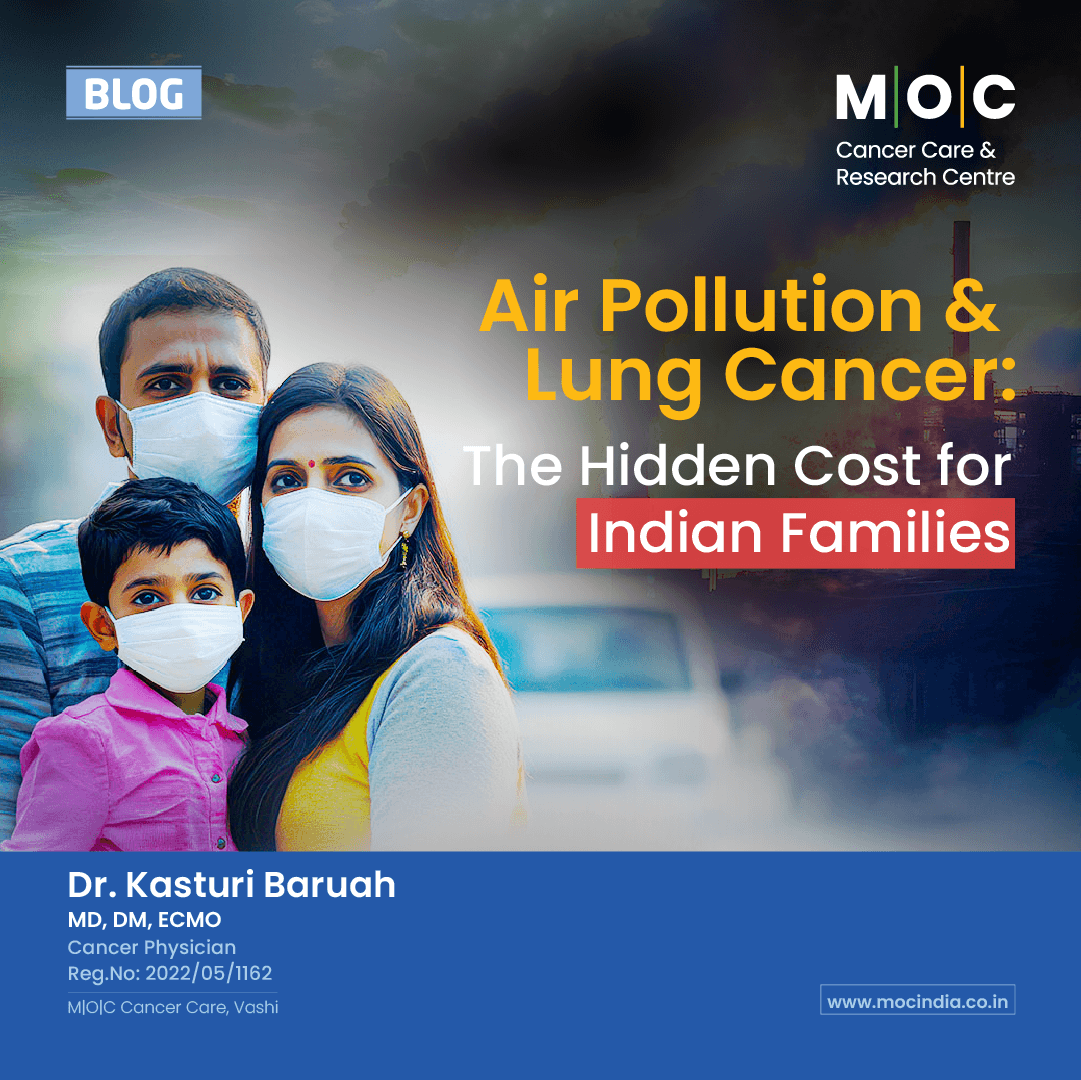
The Cost of Breathing: How Air Pollution Is Pushing Indian Families Towards a Cancer Crisis
A lung cancer diagnosis rarely affects just one person. In an Indian household, it can change who earns, who takes care of the children, who looks after ageing parents and, sometimes, whether a family can afford to stay in its own home. Now consider the possibility that one of the contributing risk factors is the very air that millions of people have no choice but to breathe.
The relationship between prolonged exposure to air pollution and lung cancer is established. The International Agency for Research on Cancer classifies outdoor air pollution and particulate matter as carcinogenic to humans. Fine particles can penetrate deep into the lungs, and long-term exposure increases lung cancer risk, including among non-smokers. This makes pollution a particularly worrying public health concern in India's rapidly expanding cities.
But the social consequences deserve equal attention. India's workforce includes millions of people whose livelihoods depend on being outdoors. Street vendors, traffic personnel, construction workers, drivers and delivery partners cannot simply avoid polluted surroundings. For them, protecting their health may mean sacrificing daily income. The irony is that those with the least financial protection often have the least control over their exposure.
Cancer can deepen this inequality. When a family member is diagnosed, another member, frequently a woman, may have to leave employment to become a caregiver. Children may experience disrupted education, household savings can disappear, and families may borrow or sell assets to finance treatment. The cost is not limited to hospital bills; it includes years of interrupted aspirations and lost financial security.
The scale of India's air pollution burden is already alarming. The Global Burden of Disease Study 2019 estimated 1.67 million deaths attributable to air pollution in India in that year. A study published in *The Lancet Planetary Health* estimated the associated economic loss at US$36.8 billion, or 1.36% of India's GDP. Importantly, this includes multiple diseases, not just cancer. Lung cancer accounted for a smaller share, but its individual and family-level consequences can be devastating.
We must also recognise that pollution is an issue of economic justice. People who work outdoors, live near industrial areas or cannot afford cleaner housing often face greater exposure, while access to timely cancer diagnosis and treatment remains financially challenging for many households.
We measure a city's progress through infrastructure, investment and economic growth. Perhaps we should also ask how much of that progress is being paid for through people's health
A family's financial future should not be determined by the quality of air it is forced to breathe. Preventing cancer must therefore be part of India's economic and social development agenda, not merely its healthcare agenda.
Concerned about lung health? Connect with an oncology specialist at M|O|C Cancer Care for guidance and evaluation.
Dr. Kasturi Baruah
M.D D.M ECMO
Consultant Cancer Physician
MOC Cancer Care & Research Centre, Vashi & Panvel .
Latest Blogs
-
![Air Pollution and Lung Cancer: The Hidden Cost for Indian Families]()
- 18th Nov, 2026
- Air Pollution and Lung Cancer: The Hidden Cost for Indian Families
-
- 17th Nov, 2026
- Chronic Myeloid Leukaemia: A New Treatment Era
-
![Lung Cancer in India: Risks, Symptoms & Treatment | MOC Cancer Care]()
- 17th Nov, 2026
- Lung Cancer in India: Risks, Symptoms & Treatment | MOC Cancer Care
-
![AQI and Lung Cancer Risk in India: The Hidden Health Cost]()
- 16th Nov, 2026
- AQI and Lung Cancer Risk in India: The Hidden Health Cost
-
![What Is Chemotherapy? How It Works, Side Effects & Care]()
- 5th Nov, 2026
- What Is Chemotherapy? How It Works, Side Effects & Care
-
- 4th Nov, 2026
- Blood Cancer Symptoms: 10 Warning Signs You Should Never Ignore


Book Your Appointment