

Drinking Water Contamination and Gastric Cancer: Is There a Link?
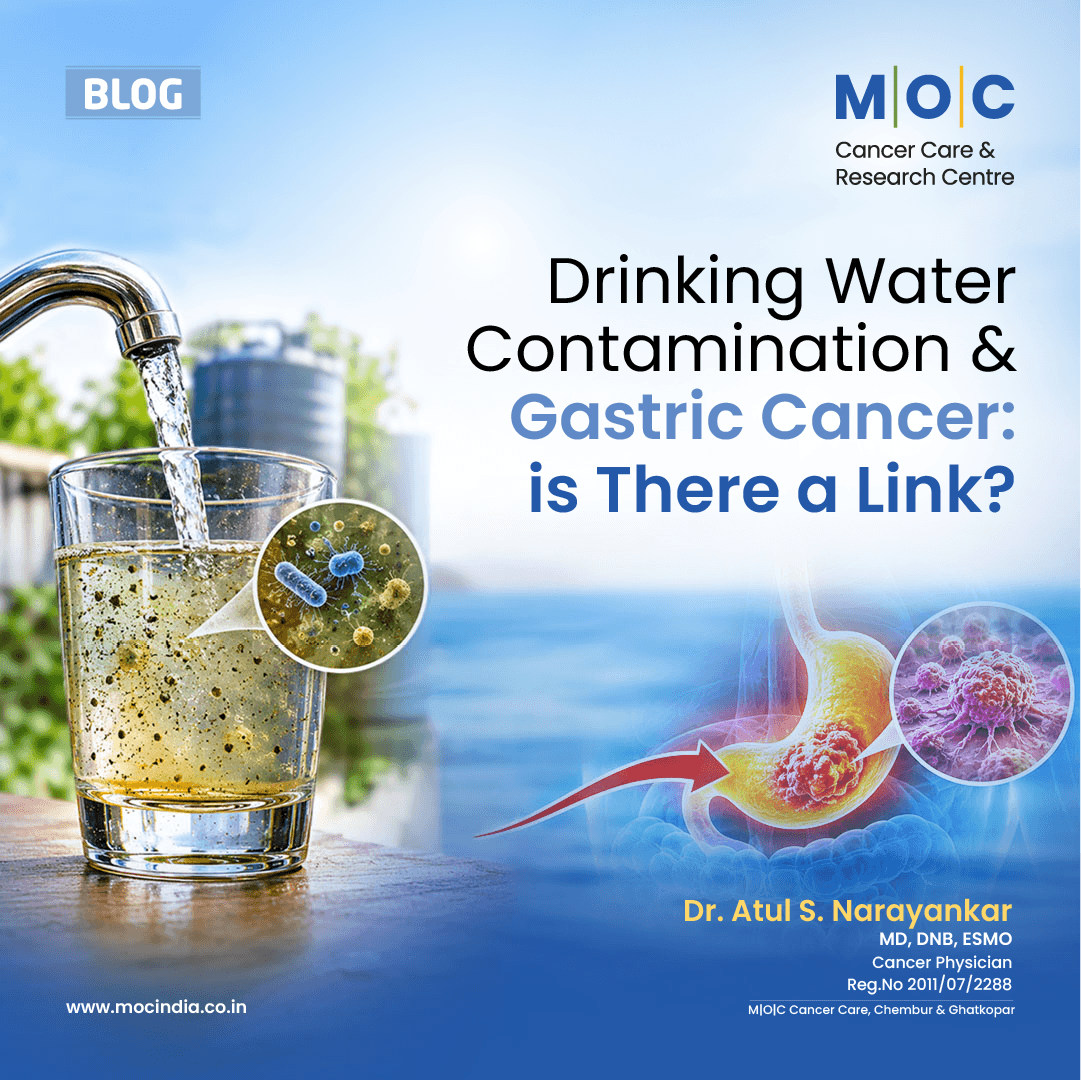
Can Contaminated Drinking Water Increase Gastric Cancer Risk? Understanding the Possible Link
For millions of Indian households, drinking water is often taken for granted. Whether it comes from municipal pipelines, borewells, tankers or household storage tanks, its safety is not always guaranteed. While contaminated water is commonly associated with diarrhoea, typhoid and other infections, an important question is emerging: Could long-term exposure to certain contaminants also influence the risk of gastric (stomach) cancer?
The answer is not straightforward. Research suggests possible links between certain water contaminants and gastric cancer, but there is currently insufficient evidence to establish contaminated drinking water as a direct or independent cause of the disease.
What could be present in contaminated drinking water?
In India, groundwater contamination is a concern in several regions due to industrial discharge, agricultural runoff, inadequate sewage management and naturally occurring minerals. Substances such as nitrates, arsenic and other chemical contaminants can enter drinking-water sources.
Of particular interest is nitrate contamination. Nitrates can enter groundwater through excessive fertiliser use, sewage leakage and agricultural waste. Under certain conditions, nitrates can be converted into nitrites, which may react with compounds in the body to form N-nitroso compounds. Some of these compounds have cancer-causing properties.
A 2022 systematic review and meta-analysis published in *Environmental Research*, examining 60 studies on cancer outcomes, reported an association between nitrate exposure through drinking water and gastric cancer. However, the researchers also highlighted that evidence was limited, study findings were heterogeneous and very few studies came from low- and middle-income countries such as India. An association does not establish that nitrate-contaminated water causes stomach cancer.
Arsenic is another important contaminant. The World Health Organization (WHO) recognises long-term exposure to inorganic arsenic through drinking water as a human carcinogenic risk, particularly for skin, bladder and lung cancers. However, its role in causing gastric cancer is not established.
The more established risk factors cannot be overlooked
In India, one of the most recognised risk factors for gastric cancer is chronic infection with *Helicobacter pylori* (H. pylori), a bacterium that infects the stomach lining and can cause persistent inflammation. Over several years, this inflammation may lead to changes in stomach cells and, in some individuals, cancer. Poor sanitation and unsafe water may contribute to the transmission of infections through faecal contamination, although the specific role of drinking water in transmitting H. pylori remains uncertain.
Other risk factors include excessive consumption of salt-preserved and processed foods, smoking, alcohol consumption and a diet low in fresh fruits and vegetables. Family history and certain pre-existing stomach conditions may also increase susceptibility.
Not every stomach problem signals cancer, but persistent digestive symptoms deserve attention. Understand the risk factors and recognise the warning signs of gastric cancer.
Dr.Atul S. Narayankar
M.D DNB ECMO
Consultant Cancer Physician
MOC Cancer Care & Research Centre, Chembur & Ghatkopar.
Latest Blogs
-
![Drinking Water Contamination and Gastric Cancer: Is There a Link?]()
- 23rd Nov, 2026
- Drinking Water Contamination and Gastric Cancer: Is There a Link?
-
- 20th Nov, 2026
- Frequent Urination in Men: Causes, Prostate Problems & Cancer
-
![Air Pollution and Lung Cancer: The Hidden Cost for Indian Families]()
- 18th Nov, 2026
- Air Pollution and Lung Cancer: The Hidden Cost for Indian Families
-
- 17th Nov, 2026
- Chronic Myeloid Leukaemia: A New Treatment Era
-
![Lung Cancer in India: Risks, Symptoms & Treatment | MOC Cancer Care]()
- 17th Nov, 2026
- Lung Cancer in India: Risks, Symptoms & Treatment | MOC Cancer Care
-
![AQI and Lung Cancer Risk in India: The Hidden Health Cost]()
- 16th Nov, 2026
- AQI and Lung Cancer Risk in India: The Hidden Health Cost

Book Your Appointment