


"Cancer Can’t Wait- But Prevention Can Win"- Dr Krushna Chaudhari
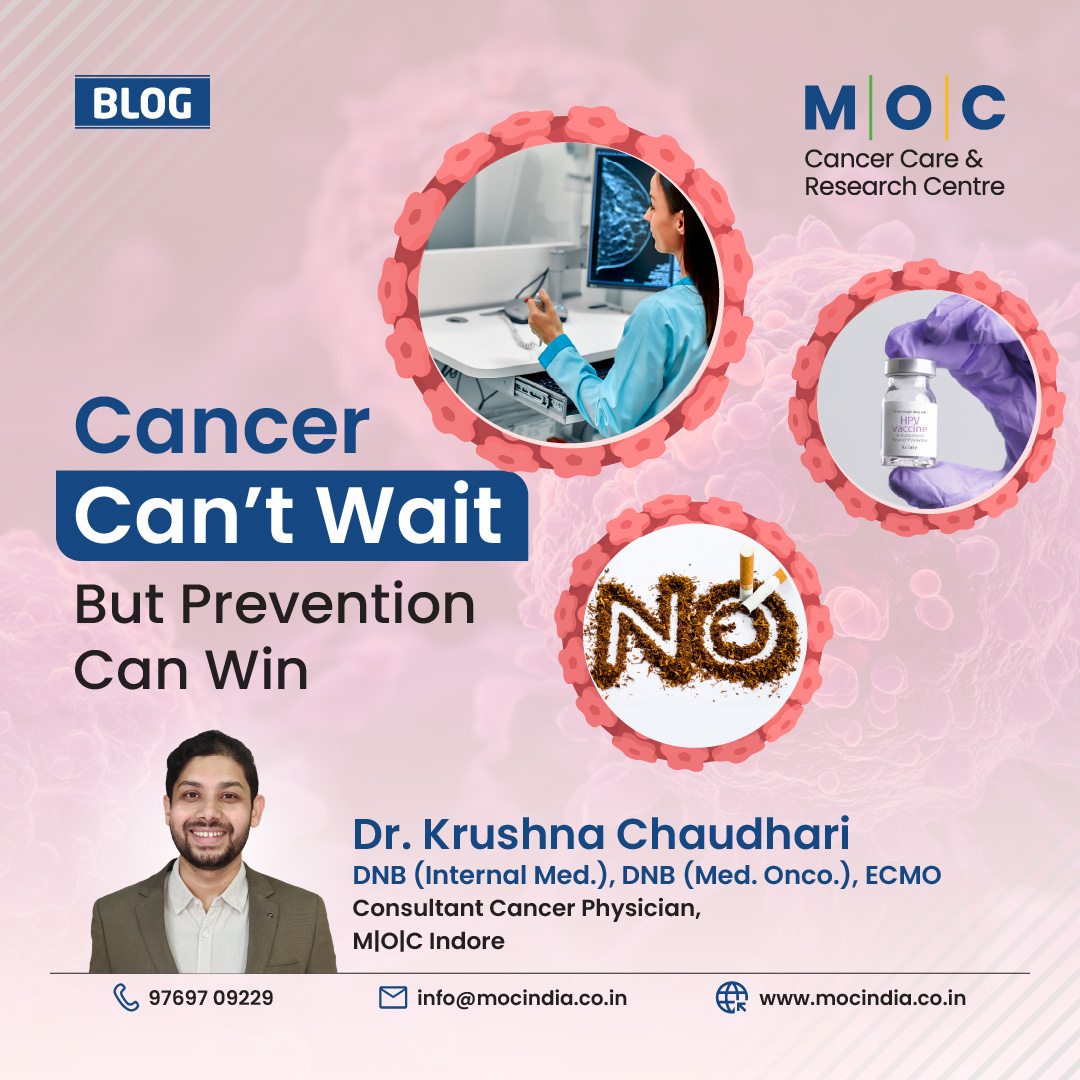
Imagine an average Indian family residing in your neighbourhood where a Father and Mother are into service, and their teenage daughter dreams of becoming an engineer. One day, the mother is diagnosed with late-stage breast cancer. An unsettling trauma begins, treatment costs mount, dreams are put on hold, and the entire family is pushed to a silent, painful struggle. If this can be called a trauma for a middle class family, imagine a catastrophe that a small-income family in a village may encounter in a similar situation.
This isn’t a rare story. This is increasingly becoming a reality playing out in thousands of homes across India today. Is there a way we can rewrite this situation to make it acceptable?
Preventive Oncology- the science of preventing and detecting cancer early- offers a powerful way to rewrite such stories, especially in a country like India where the disease burden is growing fast and resources are stretched thin.
Did you know that the cancer burden in India is growing to become a silent epidemic. India reports over 1.5 million new cancer cases every year, and this number is expected to double by 2040. More than 8 Lakh patients die from cancer annually, often due to late diagnosis. Breast, cervical, and oral cancers account for more than 34% of all cancer cases in India. Over 70% of cancer patients in India are diagnosed at advanced stages, where treatment becomes more complex, expensive, and less effective. For every name on these statistics, there is a grieving family, a broken home, and a child who may never finish school. This is why prevention is not just a medical but a human necessity.
What Is Preventive Oncology?
Preventive oncology focuses on stopping cancer before it starts or detecting it early when it is most treatable. It involves:
- Primary prevention: Lifestyle changes, tobacco control, vaccinations (like HPV).
- Secondary prevention: Early detection through screenings (e.g., Pap smears, mammography).
- Tertiary prevention: Monitoring survivors to prevent recurrence.
It’s not high-tech or unaffordable- it’s practical, accessible, and life-saving.
Why Preventive Oncology Matters More in India?
1. Our Population Is Our Challenge and Our Strength
a. With 1.4+ billion people, even a small percentage of undiagnosed cancer can lead to millions suffering. But this also means that preventive programs, if scaled well, can save millions of lives and relieve the pressure on our already burdened healthcare system.
2. Affordability Is Critical- Advanced cancer treatment in India can cost a bomb. For many, that’s more than a lifetime’s savings. In contrast:
- a.HPV vaccine to prevent cervical cancer costs under ?2,000 per dose and is now being included in public health programs.
- b.A simple visual oral cancer exam by a trained health worker costs less than ?100.
- c.Pap smear or VIA screening can detect early-stage cervical cancer at under ?500.
Early detection means simpler treatment, lower costs, and higher survival rates.
3. It Impacts Real Lives, Not Just Numbers- Preventive oncology means:
- a. A mother lives to see her children grow up.
- b. A father doesn’t lose months of work to hospital visits.
- c. A daughter doesn’t have to drop out of school to care for a parent.
- d. It means dignity, security, and hope.
What’s in It for the Common Man?
- Peace of Mind- Knowing you're healthy or catching a disease early brings emotional relief—not just for you but for your entire family.
- Saves Money and Time- Screening once every few years costs less than one month of cancer treatment. It also saves you months of travel, waiting, and hospital stays.
- A Future Without Fear- When communities embrace prevention, they build a culture of health. Children grow up with better habits. Adults get regular checkups. Lives improve.
Cancer doesn't care if you live in a metro or a village. But prevention gives everyone a fair chance—especially the poor, the rural, and the voiceless. For India, preventive oncology isn’t just smart policy—it’s a moral obligation.
Let us invest in early detection, because no mother should suffer when a simple vaccine could have saved her. No father should die when a 5-minute screening could have warned him.
Dr. Krushna Chaudhari
DNB DNB ECMO
Consultant Cancer Physician
MOC Cancer Care & Research Centre, Indore
Latest Blogs
-
![Multiple Myeloma: When Routine Clinical Findings Point to a Plasma Cell Disorder]()
- 14th Oct, 2026
- Multiple Myeloma: When Routine Clinical Findings Point to a Plasma Cell Disorder
-
![5 Healthy Habits That Don't Prevent Liver Cancer]()
- 12th Oct, 2026
- 5 Healthy Habits That Don't Prevent Liver Cancer
-
![One Breast Bigger Than the Other: Normal or a Warning Sign?]()
- 8th Oct, 2026
- One Breast Bigger Than the Other: Normal or a Warning Sign?
-
![Peau d’Orange: Orange-Peel Skin and Breast Cancer Signs]()
- 7th Oct, 2026
- Peau d’Orange: Orange-Peel Skin and Breast Cancer Signs
-
![Second-Hand Smoke: Can Your Neighbour’s Cigarette Harm You?]()
- 7th Oct, 2026
- Second-Hand Smoke: Can Your Neighbour’s Cigarette Harm You?
-
![1.9 Lakh Cancer Cases in India Linked to Infections: What to Know]()
- 6th Oct, 2026
- 1.9 Lakh Cancer Cases in India Linked to Infections: What to Know
.jpeg)

.jpeg)
Book Your Appointment