


Can Poor Oral Hygiene Affect Cancer Risk? | M|O|C Cancer Care
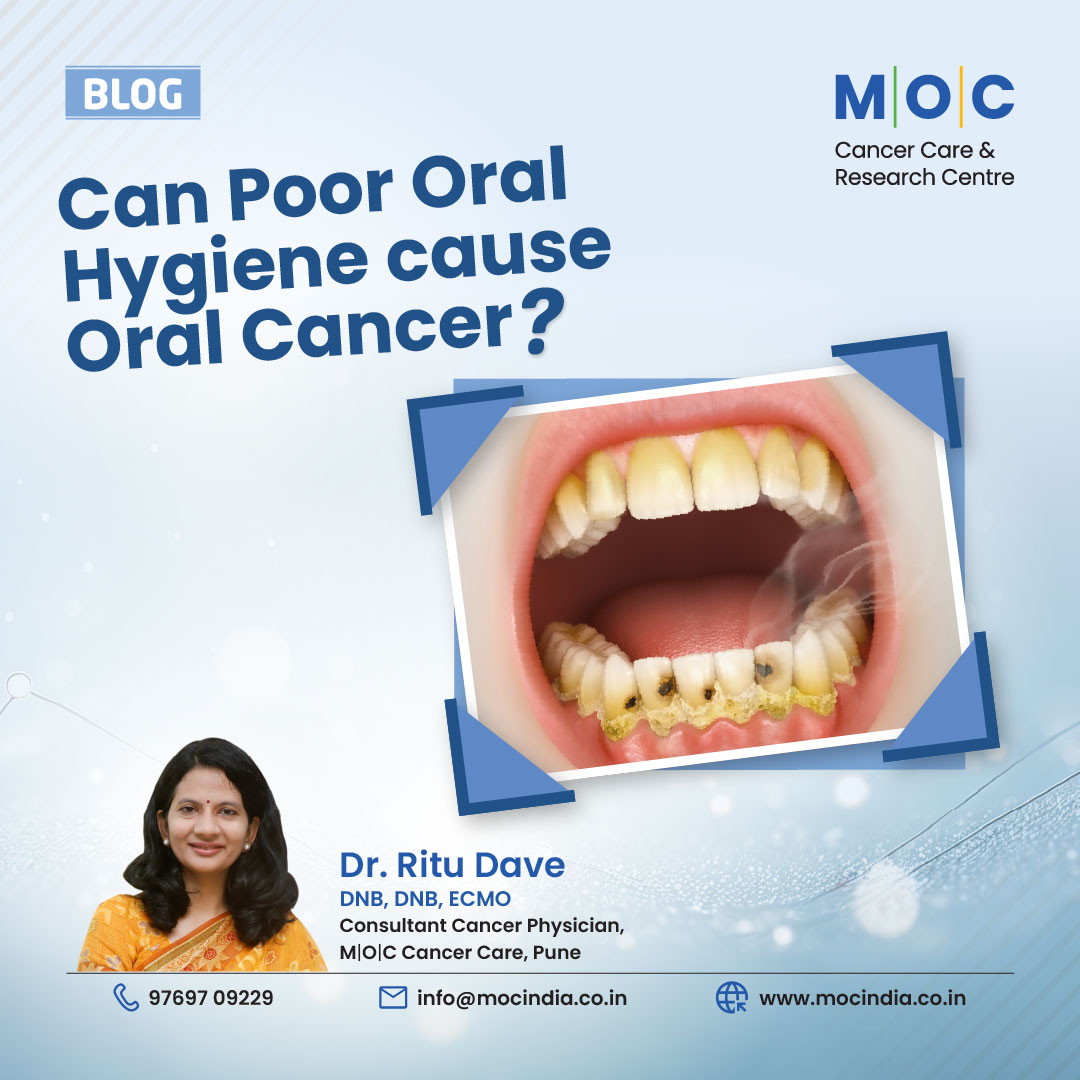
Can Poor Oral Hygiene Affect Cancer Risk? What Your Mouth May Be Telling You About Your Health
We often think of oral hygiene as a matter of clean teeth, fresh breath and preventing cavities. But the health of the mouth is closely connected with the health of the rest of the body. Growing research is examining how gum disease, chronic inflammation and changes in the oral microbiome may be linked with several diseases, including cancer.
It is important to make one distinction at the outset: poor oral hygiene does not mean that a person will develop cancer. The evidence is strongest for an association between poor oral health and oral cancer, while research into links with cancers elsewhere in the body is still evolving.
The India connection
This subject deserves particular attention in India. Oral cancer is a major public-health concern, and our risk profile is influenced by habits that are common in the country. Tobacco in smoked and smokeless forms, alcohol and areca nut (supari), including products such as gutka and tobacco-containing paan, are established risk factors.
The International Agency for Research on Cancer (IARC) identifies tobacco, alcohol and betel quid/areca nut as important causes of oral cancer. A 2024 IARC analysis estimated that, in India, different smokeless-tobacco and areca-nut products accounted for substantial proportions of oral cancer cases. Among men, khaini and gutka were among the major contributors; among women, areca nut and betel quid with tobacco were prominent contributors.
Where does oral hygiene fit in?
A case-control study conducted in Pune, involving 187 people with oral cancer and 240 controls, found that poor oral hygiene was associated with higher odds of oral cancer. The association was particularly strong among people who chewed tobacco. This does not prove that inadequate brushing or gum disease alone causes cancer. It suggests that oral hygiene may interact with other exposures and biological processes.
More recent evidence points in the same direction. A systematic review and meta-analysis published in 2026, covering 15 studies, found that infrequent toothbrushing and irregular dental check-ups were associated with increased oral-cancer risk. Again, association is not the same as causation, and factors such as tobacco, alcohol, diet, socioeconomic conditions and access to healthcare can influence these findings.
The inflammation connection
One possible explanation is chronic inflammation. When plaque builds up around the teeth, bacteria can contribute to gingivitis and, in some people, progress to periodontitis- a deeper gum infection that can damage the tissues and bone supporting the teeth.
Periodontitis is not simply a local problem. The mouth contains a large and diverse community of microorganisms, and inflammation can influence the body's immune response. Research has therefore explored whether persistent oral inflammation and changes in the oral microbiome could contribute to cancer-related processes.
A systematic review and meta-analysis published in 2023 found an association between periodontal disease and oral squamous-cell carcinoma, particularly severe periodontal disease. However, the authors also noted that the available evidence did not establish a clear causal relationship. This distinction matters: an association can point researchers towards a possible mechanism, but it cannot by itself prove that one condition directly causes the other.
What about cancer elsewhere in the body?
The mouth is part of a larger biological system, so researchers are also studying possible links between periodontal disease and cancers outside the oral cavity. Proposed mechanisms include chronic inflammation, immune-system changes, bacterial products and alterations in the microbiome.
Some observational studies have reported associations between periodontal disease and cancers such as colorectal, pancreatic, lung and upper gastrointestinal cancers. But these findings should not be interpreted as proof that gum disease causes these cancers. People with poor oral health may also differ in smoking, alcohol use, diet, diabetes, socioeconomic status and healthcare access- factors that can independently influence cancer risk.
The broader message is therefore not that brushing your teeth can “prevent cancer”. Rather, maintaining oral health is one practical part of reducing avoidable health risks and supporting overall wellbeing.
A simple prevention checklist
Good oral care does not need to be complicated. Brush twice a day with fluoride toothpaste, clean between the teeth, and seek dental advice if there is persistent gum bleeding, swelling, pain, loose teeth or recurrent mouth ulcers. Regular dental examinations can identify problems before they become advanced.
For Indians, there is an even more important step: avoid tobacco in every form and avoid areca nut or supari, even when it is marketed as tobacco-free. IARC classifies areca nut as carcinogenic to humans. Tobacco-containing products are also strongly linked to oral cancer.
Any persistent white or red patch, unexplained ulcer, lump, difficulty opening the mouth, difficulty swallowing, persistent hoarseness or unexplained bleeding should be evaluated rather than ignored, particularly in someone who uses tobacco or areca nut.
Have a Persistent Mouth Ulcer or Patch? Get It Evaluated from our Cancer Expert at- M|O|C Cancer Care
Oral health is often treated as separate from general health, but it is not. The mouth can reflect inflammation, infection, nutritional problems and lifestyle exposures that affect the wider body. We should therefore move beyond the idea that dental care is only about teeth.
The emerging science is valuable because it reminds us that prevention is interconnected. Good oral hygiene cannot guarantee protection from cancer, but it can reduce oral disease, support healthier gums, improve quality of life and create opportunities for earlier detection of suspicious changes.
In cancer prevention, there is rarely one magic measure.
Avoiding tobacco and areca nut, limiting alcohol, maintaining a healthy lifestyle, attending recommended screenings and taking care of oral health are all pieces of the larger prevention picture.
Dr. Ritu Dave
DNB DNB ECMO
Consultant Cancer Physician
MOC Cancer Care & Research Centre, Shivaji Nagar .
Latest Blogs
-
![Can Poor Oral Hygiene Affect Cancer Risk? | M|O|C Cancer Care]()
- 29th Sep, 2026
- Can Poor Oral Hygiene Affect Cancer Risk? | M|O|C Cancer Care
-
![Cancer Care in India: Balancing Innovation & Affordability]()
- 28th Sep, 2026
- Cancer Care in India: Balancing Innovation & Affordability
-
![Throat Cancer Symptoms: Early Signs & Warning Signs]()
- 24th Sep, 2026
- Throat Cancer Symptoms: Early Signs & Warning Signs
-
![Endometrial Cancer Staging: Stages 1 to 4 Explained]()
- 22nd Sep, 2026
- Endometrial Cancer Staging: Stages 1 to 4 Explained
-
![Colon Cancer vs Piles: How to Tell the Difference]()
- 21st Sep, 2026
- Colon Cancer vs Piles: How to Tell the Difference
-
![Tumor vs Cancer: What Is the Difference? | MOC Cancer Care]()
- 31st Aug, 2026
- Tumor vs Cancer: What Is the Difference? | MOC Cancer Care
.jpg)
.jpeg)

Book Your Appointment